
SEC’s Atkins Signals Roundtable on Alts in 401(k)s, Citing Access and Guardrails
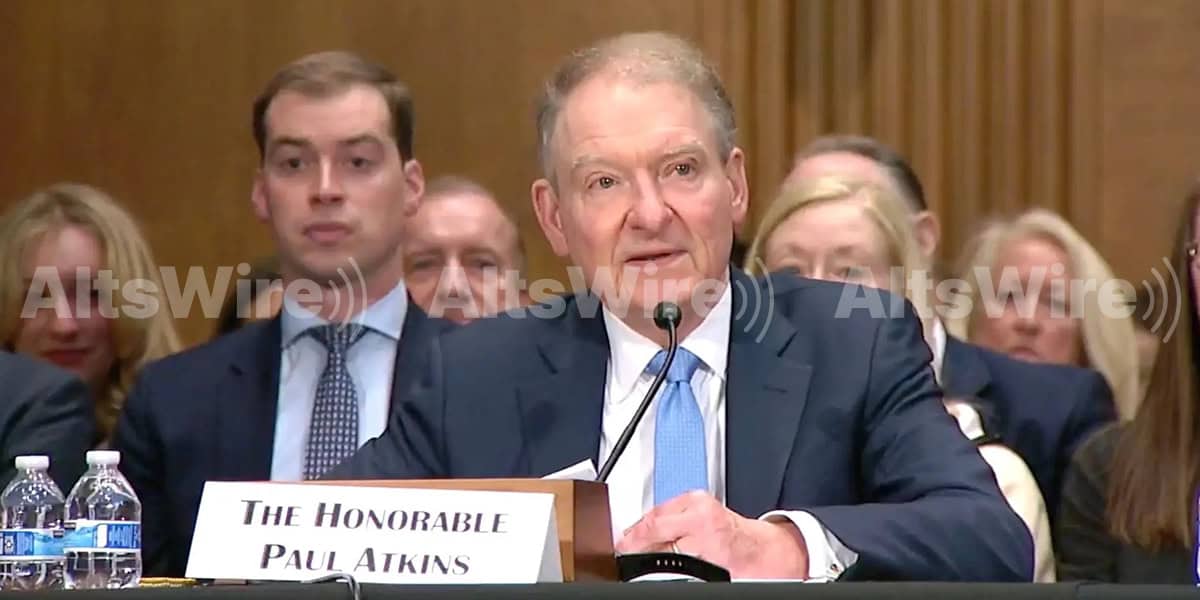
Speaking at the Managed Funds Association’s Policy Outlook 2025 conference in New York, U.S. Securities and Exchange Commission Chair Paul Atkins signaled both enthusiasm and caution as the agency explores ways to broaden retirement-plan access to alternative investments under a recent executive order issued by President Donald Trump.
Atkins said his agency may convene a public roundtable to gather input on the administration’s August directive, which calls on the SEC and U.S. Department of Labor to revise guidance and facilitate inclusion of private equity, real estate, and digital assets in 401(k) plans.
“I think the president’s exactly right to ask us to look into this,” Atkins told conference attendees, adding that SEC and DOL officials are already coordinating on potential next steps.
Balancing Access With Investor Protection
While Atkins said that excluding private markets from defined contribution portfolios can lead to unbalanced allocations, he also reiterated that appropriate guardrails are essential – a theme consistent with prior SEC statements on retail access to illiquid products.
“We don’t want to have our grandmothers invest in a bunch of garbage that’s not going to be appropriate,” Atkins said, noting the need for guidelines to help fiduciaries determine suitable allocations.
The remarks build on comments Atkins made earlier this year regarding private credit and systemic risk, where he told Bloomberg the SEC does not view the fast-growing private credit market as a threat to financial stability even as it exceeds $1.7 trillion in assets globally. Instead, he emphasized the sector’s importance to capital formation and market resilience, a position welcomed by fund managers and industry advocates.
Momentum Grows Following Executive Order
The administration’s August executive order directs regulators to remove barriers that prevent 401(k) participants from accessing alternative asset classes long available to institutional investors.
The directive aims to relieve regulatory burdens and litigation risk, particularly under the Employee Retirement Income Security Act of 1974, commonly referred to as ERISA, the federal law that sets standards for private-sector retirement and health plans, including fiduciary duties and reporting requirements. These rules have historically discouraged plan sponsors from offering alternative investments such as private equity and real estate funds.
Atkins’ latest remarks appear to move that initiative forward, suggesting that a roundtable could serve as the foundation for future rule proposals or joint guidance from the SEC and DOL.
Industry Eyes Structural Challenges
Still, meaningful adoption faces significant operational and fiduciary hurdles.
Plan recordkeeping systems remain limited in their ability to handle non-daily liquidity while plan sponsors must navigate fee transparency, valuation frequency, and participant education requirements.
ERISA attorney David Kaleda, a partner at Eversheds Sutherland, speaking at an ADISA-hosted panel last month, noted that while policy momentum is real, “fiduciary risk doesn’t disappear just because regulators open the door.”
Kaleda explained that while ERISA reforms may reduce uncertainty, plan sponsors will still face due diligence obligations when considering illiquid investments for defined contribution plans.
Accredited Investor Definition Under Review
Atkins also hinted that the SEC may revisit the definition of an accredited investor, calling it “a blunt tool” that “doesn’t make a lot of sense.” A bipartisan bill passed by the House in July would extend accredited status to individuals who pass a FINRA-administered exam, potentially expanding private-market participation among retail investors.
His comments come amid broader debate over investor eligibility standards. The SEC’s Investor Advisory Committee, as reported by AltsWire, recently called for modernization of the accredited investor test, urging regulators to focus on sophistication rather than wealth-based criteria. That panel also backed the use of registered funds as safer vehicles for retail exposure to private markets.
Next Steps
Although a federal shutdown has paused many non-emergency regulatory activities, Atkins said the SEC “is not slowing down at all.” Industry observers expect that a formal notice of a roundtable – or a request for public comment – could follow within weeks of government operations resuming.
If so, it would mark a concrete step toward what the administration calls the democratization of private markets – a policy shift that could reshape the landscape of U.S. retirement investing for decades to come.
Click here to visit the AltsWire directory page.