
SEC’s Peirce Defends Private Capital Markets as Superior to Government-Directed Funding
By Staff
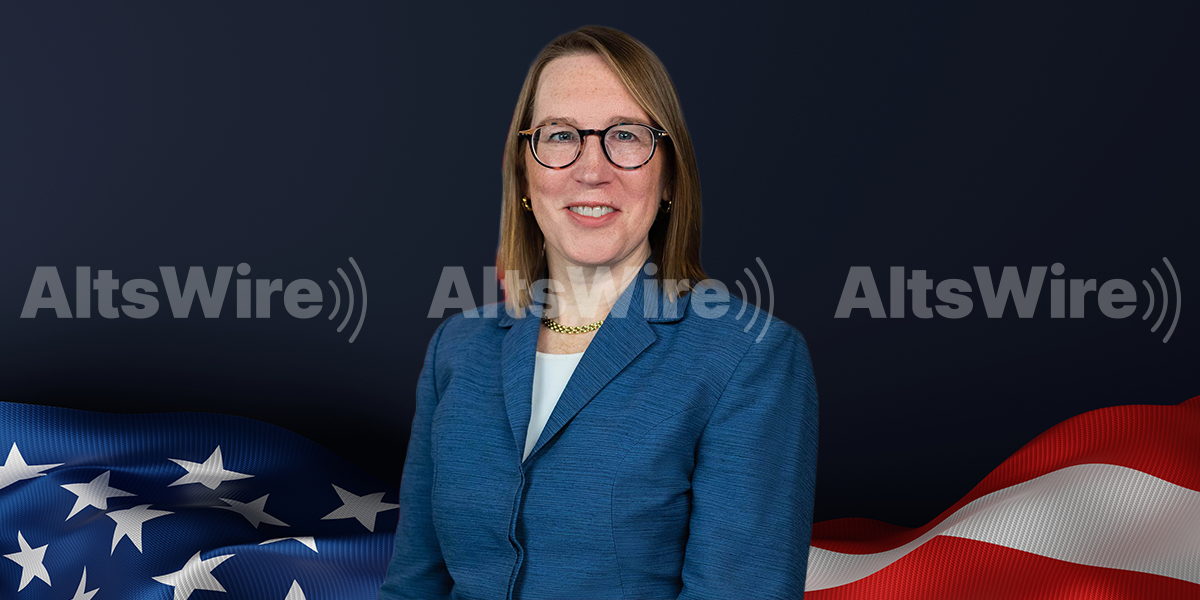
U.S. Securities and Exchange Commission Commissioner Hester M. Peirce defended private capital markets as the most effective mechanism for allocating capital to entrepreneurs, arguing in a speech Friday afternoon that government-directed funding tends to inhibit rather than encourage innovation.
Speaking at the SEC International Institute on Capital Formation in Washington, Peirce told an audience of international regulators that the task of identifying and funding promising ideas is too important for any single entity, including the government, to manage.
“Certainly not!” Peirce said, when asked rhetorically whether governments should direct the flow of capital. “Governmental efforts to allocate capital tend to inhibit, rather than encourage, human flourishing.”
Peirce, who serves on a commission that oversees the registered private fund universe, framed her remarks as a defense of the broader regulatory model in which the SEC sets rules of the road but leaves capital allocation to dispersed market participants.
Peirce offered four critiques of government-directed capital allocation. Governments, she said, are too slow to respond to changing technology and market needs. Political and bureaucratic connections tend to overshadow merit when government controls funding. Companies that depend on government allocations focus on what regulators want rather than what customers need. And government decision-makers, isolated from innovators, are poorly positioned to predict which problems need solving.
“Misallocated capital prevents the economy from growing as rapidly as it otherwise would and prevents societal problems from being solved as quickly as they should be,” Peirce said.
By contrast, Peirce added, private capital markets bring together a large and varied set of investors who independently test competing proposals for using capital. The system is imperfect, she said, but “the more participants and the wider the diversity of perspectives offering and competing for capital in the private markets, the more effective the markets will be at finding and funding solutions to human problems.”
To illustrate her thesis, Peirce devoted a substantial portion of her remarks to inventors whose work, she said, demonstrated the power of private capital to fund human ingenuity. She cited Garrett Morgan, the Cleveland inventor who patented an improved traffic signal in 1923 and developed a breathing device that protected firefighters from noxious fumes. She also pointed to Marie Van Brittan Brown, who patented an early home security system in the 1960s; Andrew Smith Hallidie, who developed the cable car system that still operates in San Francisco; and Dr. Elizabeth Clayborne, a contemporary entrepreneur who used a combination of angel investors, venture capital, and crowdfunding to bring a nosebleed-stopping medical device to market. Such innovators, Peirce said, “should inspire capital markets regulators to facilitate effective capital formation.”
Peirce called on regulators to focus on creating conditions that encourage broad participation rather than picking winners. “Our job is not to do the matchmaking, but to create a regulatory environment conducive to money and ideas meeting,” she said.
The remarks come as the SEC under Chairman Paul Atkins has moved on several fronts to ease regulatory burdens on private fund advisers. On April 20, the SEC and the Commodity Futures Trading Commission jointly proposed amendments to Form PF that would eliminate filing requirements for nearly half of currently registered private fund advisers and streamline reporting for those who remain. Peirce issued a separate statement that day titled “PF Stands for Please Fix” supporting the proposal.
The deregulatory posture is consistent with the broader agenda Atkins has set out since taking office last year. Marking his first anniversary as chairman in an April 21 address at the same Economic Club of Washington venue, Atkins outlined an “Advance, Clarify, Transform” strategy and announced plans for an “innovation exemption” to allow tokenized securities to trade on-chain.
Peirce has also been a vocal advocate for expanding retail investor access to private markets, a position that aligns with a September 2025 SEC Investor Advisory Committee recommendation urging the Commission to modernize the accredited investor framework and allow non-accredited investors to allocate a limited portion of their portfolios to private market assets through registered funds such as interval funds and tender offer funds.
Peirce was originally scheduled to deliver the speech in November 2025 but was delayed by a federal government shutdown.
Visit the AltsWire directory page.