
Supreme Court to Hear Case That Could Limit SEC’s Ability to Seek Disgorgement
By Damon Elder
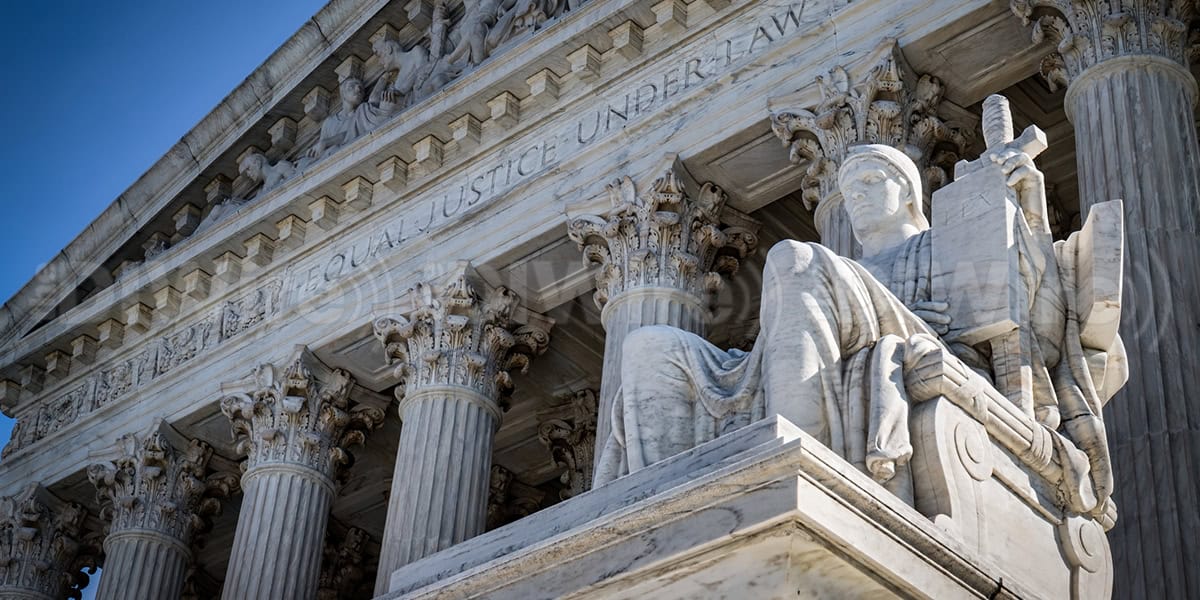
Sripetch v. SEC, set for oral argument April 20, asks whether the agency must prove investors suffered financial harm before collecting disgorgement — a question that could reshape SEC enforcement across the securities industry.
The U.S. Supreme Court will hear oral argument Monday in Sripetch v. Securities and Exchange Commission, a case that could significantly curtail one of the agency’s most powerful enforcement tools and reshape how the SEC pursues financial penalties against broker-dealers, registered investment advisers, and the distribution professionals who serve the alternative investment industry.
At issue is whether the SEC may seek disgorgement – the forced return of alleged ill-gotten gains – without proving that specific investors suffered financial harm. The Court’s resolution of that question could affect the structure of virtually every enforcement action the agency brings, given that disgorgement has historically been the largest component of the SEC’s financial recoveries. In fiscal year 2025, the SEC collected $1.4 billion in disgorgement from new enforcement actions, compared with $1.3 billion in civil penalties – making disgorgement the larger component of financial recoveries even in a year in which the agency filed 22% fewer actions than the prior year.
The case centers on Ongkaruck Sripetch, who pleaded guilty to selling unregistered securities as part of a series of fraudulent penny stock schemes. In a separate civil enforcement action, the U.S. District Court for the Southern District of California ordered Sripetch to disgorge more than $2.2 million in profits, plus more than $1 million in prejudgment interest, without requiring the SEC to demonstrate that particular investors had suffered pecuniary harm. The Ninth Circuit affirmed.
That holding deepened an existing split among the federal appeals courts. The Second Circuit has held that proof of investor pecuniary harm is a prerequisite for disgorgement. The First and Ninth circuits have held that no such showing is required – that disgorgement is tethered to a wrongdoer’s unlawful gain, not a victim’s documented loss. The Supreme Court granted review to resolve the conflict.
Sripetch is the third time in less than a decade that the Court has taken up the scope of the SEC’s disgorgement authority. In Kokesh v. SEC (2017), the Court unanimously held that disgorgement is a “penalty” subject to a five-year statute of limitations, rejecting the agency’s longstanding position that it was a remedial measure with no time bar. In SEC v. Liu (2020), the Court held that disgorgement must be limited to a defendant’s net profits and directed to the benefit of victims – not paid into the U.S. Treasury as a general penalty. Congress subsequently amended the securities laws in an attempt to codify the SEC’s disgorgement authority, but left key questions unresolved, including whether a showing of investor harm is required.
Those unresolved questions have since produced conflicting outcomes in the lower courts, and it is that conflict that Sripetch will ask the justices to settle.
The stakes extend beyond the courtroom. A ruling requiring the SEC to demonstrate investor pecuniary harm before seeking disgorgement would align with the investor harm-focused enforcement philosophy espoused by SEC Chairman Paul Atkins and could narrow the agency’s exposure calculations in contested cases. Broker-dealers and advisers facing enforcement actions – including those in the alternative investment distribution space – frequently negotiate disgorgement figures that far exceed any penalty the agency could otherwise justify, because current law in most circuits does not require the government to show that anyone actually lost money.
A decision is expected by the end of the Court’s term in late June or early July.
Visit the AltsWire directory page.