
Senate GOP Advances Contentious Reconciliation Bill Amid Party Divisions, Budget Maneuvers
By Damon Elder
Senate Republicans are pushing forward with their sweeping “One Big Beautiful Bill,” a nearly 1,000-page tax and spending package, despite internal divisions and procedural controversy. The legislation, which includes making the opportunity zone program permanent, narrowly advanced in a 51-49 vote late Saturday.
Sens. Rand Paul (R-Ky.) and Thom Tillis (R-N.C.) broke ranks to oppose the motion. Tillis, under pressure from President Donald Trump, announced Sunday he will not seek reelection in 2026, citing the partisan environment and a lack of support for independent voices.
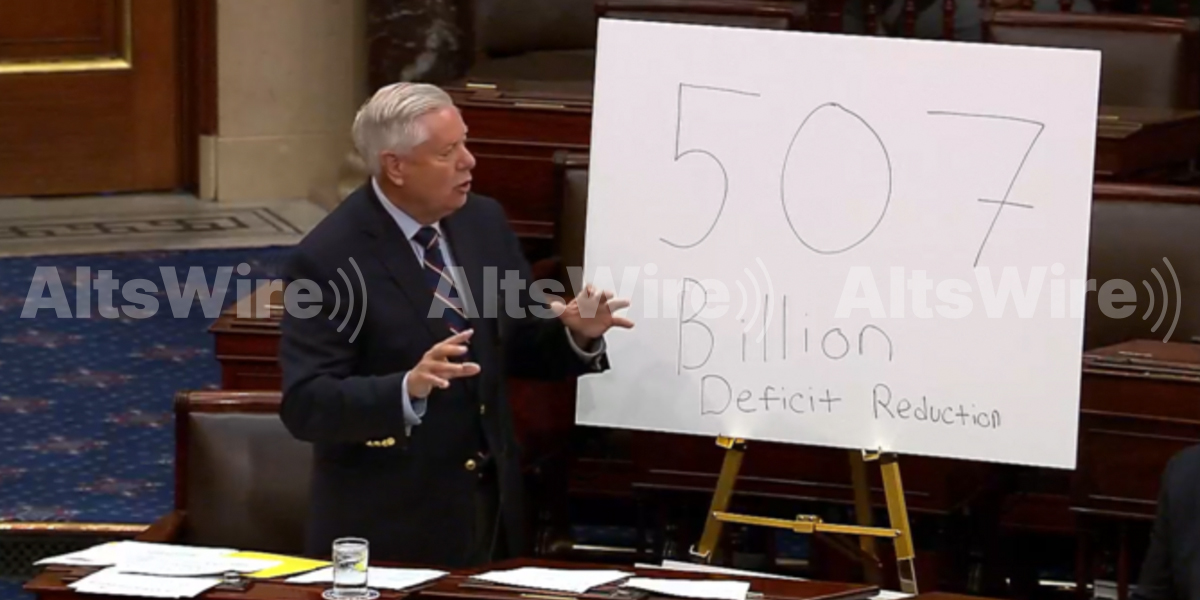
At the heart of the legislative clash is an unprecedented budgetary maneuver. Senate Republicans, led by Budget Committee Chairman Lindsey Graham (R-S.C.), are using a “current policy baseline” to exclude the cost of extending the 2017 tax cuts from deficit calculations. This tactic, never before used in reconciliation, allows the Congressional Budget Office to score the bill as reducing the deficit by $508 billion, compared with a $3.25 trillion increase under traditional accounting.
Democrats have condemned the move as a budgetary gimmick that sets a dangerous precedent by undermining the Byrd Rule and reconciliation’s deficit constraints. “We’re now operating in a world where the filibuster applies to Democrats but not to Republicans,” said Sen. Ron Wyden (D-Ore.), the top Democrat on the Finance Committee.
The bill extends individual tax cuts, boosts defense and border security funding, and cuts Medicaid and nutrition programs — issues that have fractured the GOP. Moderates warn of state budget strains, while fiscal hawks push for deeper spending reductions.
Altswire previously reported on the extensive changes to the opportunity zone program included in the Senate version of the legislation. Key changes include a permanent 10-year designation cycle, new eligibility thresholds, enhanced compliance reporting, and a 30% basis increase for long-term rural investments.
With 20 hours of floor debate now underway, Republicans aim to send the bill to the House before their self-imposed July 4 deadline. Passage remains uncertain in both chambers, where GOP majorities are razor-thin and dissent continues.
Click here to visit the AltsWire directory page.