SEC Proposes to Scrap Shareholder Proposal Rule, Ease Proxy Requirements for BDCs and Registered Funds
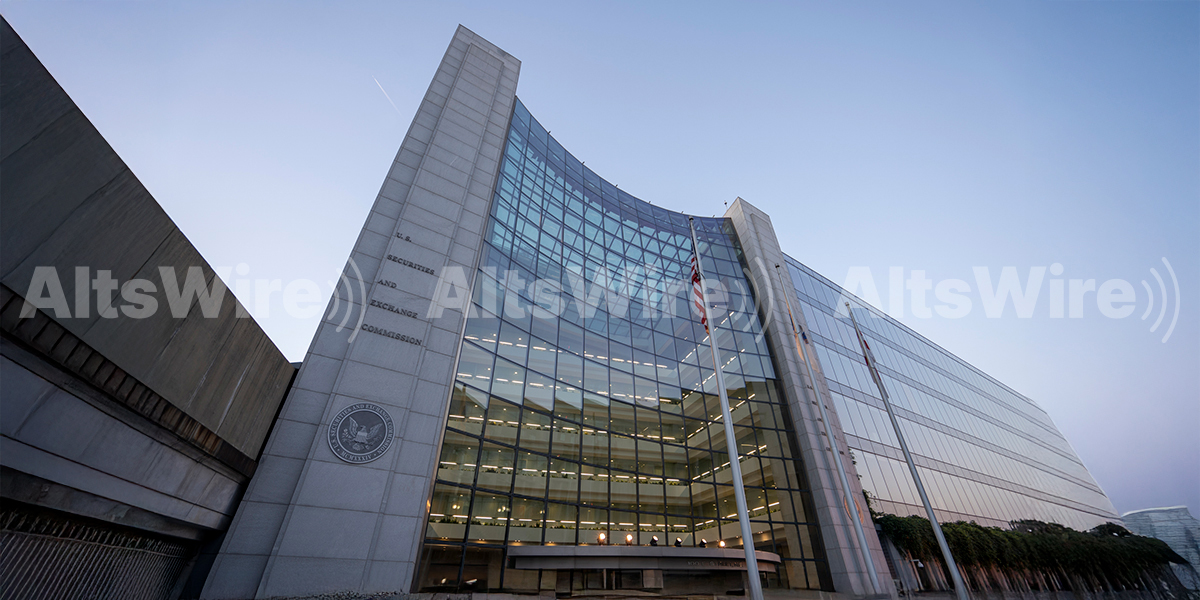
The U.S. Securities and Exchange Commission has proposed rescinding Rule 14a-8, the decades-old requirement that public companies include qualifying shareholder proposals in their proxy statements, arguing the rule exceeds the commission’s statutory authority and improperly wades into territory reserved for state corporate law.
The rescission was one of two proxy-related proposing releases the commission issued the same day. The companion measure would modernize the broader proxy solicitation process, eliminating several longstanding delivery and filing requirements for companies and shortening the window brokers have to identify beneficial owners of street-name shares.
“Today, the commission issued two proposing releases related to its proxy rules under the Securities Exchange Act of 1934,” SEC Chair Paul S. Atkins said in a statement. “The proposals reflect two of my highest regulatory priorities. First, ensuring that the commission does not improperly intrude into state corporate law when applying the federal securities laws. Second, updating the commission’s rules to reflect developments in market practice and technology, and other innovations, since the rules’ adoption or last amendment.”
Rule 14a-8 dates to 1942, when the commission, relying on its authority under Section 14(a) of the Exchange Act to regulate the manner of proxy solicitations, began requiring companies to include certain shareholder proposals in their proxy materials and identify them on the form of proxy. In its proposing release, the SEC argues that authority was never meant to reach the underlying question of whether a matter is even eligible for a shareholder vote in the first place – a determination the commission says belongs to state law and a company’s own governing documents.
“The [SEC] has no authority to determine which matters are a proper subject for a shareholder vote,” Atkins said. Rescinding Rule 14a-8, he added, “would help ensure that states are able to fully exercise their longstanding authority.”
The proposal follows a Dec. 16, 2025, executive order, “Protecting American Investors from Foreign-Owned and Politically-Motivated Proxy Advisors,” which directed the SEC chair to consider revising or rescinding rules relating to shareholder proposals, including Rule 14a-8. The commission notes it has also received rulemaking petitions urging it to preserve or narrow the rule rather than eliminate it, including from Ceres, the Shareholder Rights Group, and Americans for Financial Reform, and says it will weigh those petitions alongside public comments before finalizing the rescission.
The rescission would reach well beyond operating companies. Because Section 20(a) of the Investment Company Act of 1940 mirrors Section 14(a) of the Exchange Act, registered investment companies and business development companies – what the release calls “regulated funds” – are subject to Rule 14a-8 today even when they have no exchange-listed equity. The SEC’s proposal would rescind the rule for regulated funds along with operating companies, but the commission acknowledges the fit is imperfect: its release notes that regulated funds generally draw fewer shareholder proposals than operating companies, that the proposals they do receive tend to win higher levels of shareholder support, and that proxy campaigns at funds can be harder to run given their diffuse, retail-oriented shareholder bases. The commission is separately asking in its request for comment whether regulated funds should be carved out for a different approach altogether, including a possible standalone rule under the Investment Company Act, rather than folded into a blanket rescission.
Alongside the 14a-8 rescission, the commission proposed amendments to Rule 14a-4(c) governing discretionary proxy voting authority – the power a company can exercise to vote uninstructed shares on matters not listed on the proxy card. The changes would let companies seek discretionary authority over shareholder proposals submitted outside the Rule 14a-8 process, including under a company’s advance-notice bylaws, even when a dissident shareholder has run an independent solicitation reaching a majority of voting shares, which current rules generally prohibit. In exchange, the proposal would give individual shareholders a mechanism, including a check-box option on the proxy card, to block a company from exercising that discretionary authority over their own shares.
“The amendments, therefore, would provide companies with more flexibility and shareholders with more agency,” Atkins said of the Rule 14a-4(c) changes.
The second release, covering proxy solicitation modernization, would eliminate the requirement that companies deliver a separate annual report to security holders, letting most registrants instead rely on a Form 10-K already on file with the commission. It would also scrap the 20-business-day delivery deadline that currently applies when a proxy statement incorporates other documents by reference, eliminate the requirement to file a Notice of Exempt Solicitation, and shorten the minimum broker search period used to identify beneficial owners of street-name shares from 20 business days to five. A new requirement would add contact information to the cover pages of proxy and information statements.
“Today’s proposals demonstrate my focus on ensuring that the commission’s rules are within the agency’s statutory authority and reflect policy positions grounded in current and anticipated market practice and modern technologies,” Atkins said. “I look forward to receiving and reviewing the public’s feedback on both proposals.”
Atkins framed both releases as part of a broader retrospective review of the commission’s rulebook. None of the commission’s rules, he said, “no matter how entrenched within the agency, are immune from retrospective review.”
Comments on the Rule 14a-8 rescission and the related Rule 14a-4(c) amendments are being taken under File No. S7-2026-32; comments on the proxy solicitation modernization package are being taken under File No. S7-2026-33.
Both comment windows close 60 days after the releases are published in the Federal Register.
Visit the AltsWire directory page.