
SEC Move to Scrap No-Admit/No-Deny Rule Reaches White House for Review
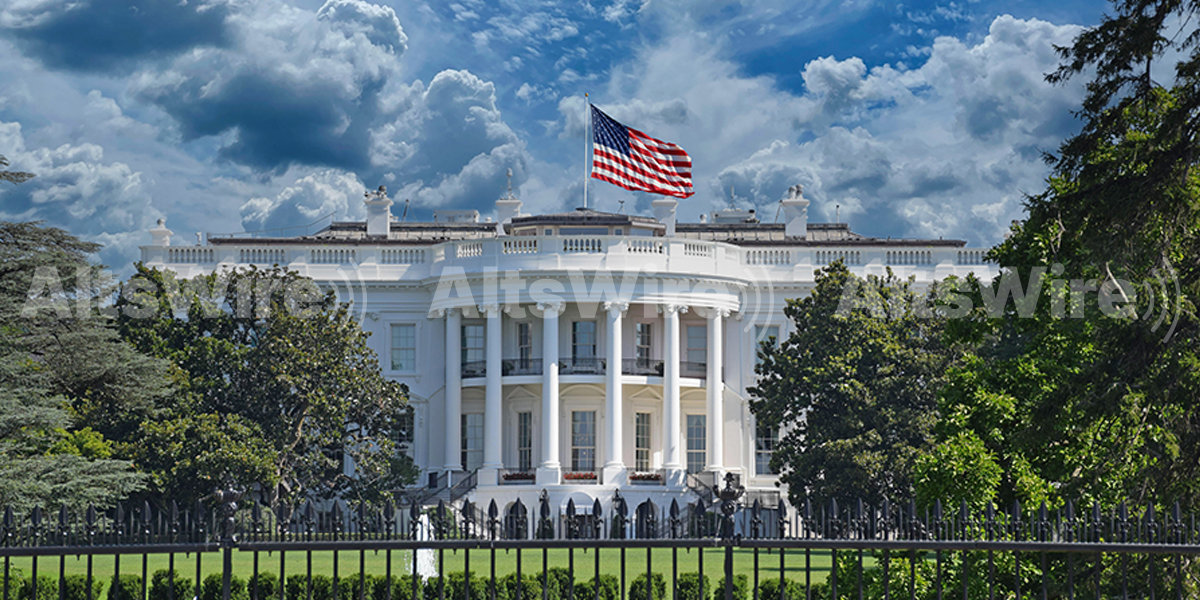
The White House is reviewing a U.S. Securities and Exchange Commission proposal to eliminate the agency’s longstanding policy requiring defendants who settle enforcement actions to refrain from publicly disputing the SEC’s allegations — a provision critics have called a gag rule that infringes on First Amendment rights.
The SEC’s proposal reached the White House Office of Management and Budget last week, beginning a formal interagency review process before any rule change can take effect. The OMB filing contained no details about the scope or structure of the proposed rescission.
The policy — formally known as the no-admit/no-deny rule — has been in place for more than 50 years. Under the policy, defendants may settle SEC enforcement actions without admitting or denying the agency’s allegations, but they risk voiding the settlement if they subsequently make public statements contradicting the SEC’s findings. The restriction applies not only to the defendants themselves but, in some cases, to statements made by others on their behalf.
Eliminating the rule would bring the SEC in line with the majority of federal agencies that do not impose no-deny provisions on settling defendants and “give the commission more flexibility in settling enforcement actions — conserving resources, providing certainty, and potentially expediting the return of money to injured investors,” the SEC said in a statement.
The rule has drawn sustained legal challenges on First Amendment grounds. Critics argue that conditioning a settlement on a lifetime prohibition against criticizing the SEC’s findings constitutes a government-imposed prior restraint on speech — one that silences the people best positioned to dispute the accuracy of the agency’s enforcement record.
Mark Chenoweth, president of the New Civil Liberties Alliance, or NCLA — a legal group that has fought the policy for eight years and has a petition pending before the U.S. Supreme Court to review the rule’s legality — welcomed the SEC’s move but urged caution about its scope. “We’re glad SEC is finally admitting after eight years of NCLA fighting them at every turn that the gag rule is indefensible,” Chenoweth said. He added that the public currently has no way to assess what the proposed rescission entails. “There are ways in which they could take half measures that wouldn’t really resolve the problem,” he said.
The SEC rejected a petition to change the policy in 2024, with Commissioner Hester Peirce dissenting. The agency defended the rule at the time on the grounds that the no-deny provision was necessary to preserve public confidence in its enforcement actions. A three-judge panel of the U.S. Court of Appeals for the Ninth Circuit subsequently upheld the rule.
Also in 2024, Thomas J. Powell, senior adviser of The Brehon Group, identified himself in AltsWire as a critic of what he called the SEC Enforcement Division’s “continuous regulatory overreach.”
Powell joined with the NCLA and several business owners, to challenge what they have called the SEC’s “unjust and draconian Gag Rule.” They filed a petition — Powell et al. v. SEC — to overturn the rule, a petition supported by 16 research organizations, advocacy groups, and law firms that filed 11 amici curiae briefs. The petition is currently pending with the U.S. Supreme Court.
Criticism From Both Directions
The rule has also attracted criticism from the opposite direction — that it is too lenient, allowing companies and individuals to resolve enforcement actions without any public acknowledgment of wrongdoing. In 2013, the agency said it would seek formal admissions in some cases, a practice that continues under current enforcement policy. The SEC said rescinding the no-deny rule is not expected to affect its ability to negotiate admissions as part of a settlement.
The policy has been a recurring flashpoint with high-profile defendants. Elon Musk settled SEC allegations this month that he violated disclosure requirements by failing to timely report his growing stake in Twitter in 2022, paying $1.5 million to resolve the matter without admitting or denying the agency’s findings. Musk and Mark Cuban have both publicly criticized the no-deny policy and have supported efforts to end it.
What Happens Next
An OMB review is a required step in the federal rulemaking process before a significant regulatory change can advance. The review period has no fixed deadline, though most significant rules receive a decision within 90 days. Following OMB clearance, the SEC would typically publish a proposed rule in the Federal Register, open a public comment period, and then issue a final rule — a process that can take months to more than a year depending on the complexity of the change and the volume of public comment.
The timing of the SEC’s rescission effort coincides with the NCLA’s pending Supreme Court petition. If the high court agrees to hear the case, the justices could address the rule’s constitutionality directly, potentially mooting the administrative process. If the court declines to take the case and the SEC completes its rescission before a final judicial ruling, the legal challenge would likely be rendered void. The intersection of the two tracks — administrative rescission and judicial review — means the rule’s ultimate fate could be resolved on either front.
For the alternatives industry, the change would primarily affect registered investment advisers, broker-dealers, fund sponsors, and other regulated entities that resolve SEC enforcement actions through settlement. A rescission of the no-deny rule would permit future defendants who settle enforcement matters to speak freely about the SEC’s allegations without risking the settlement.
Visit the AltsWire directory page.