
SEC Cross-Trading Plan Excludes Level 3 Assets Held by Interval Funds, BDCs
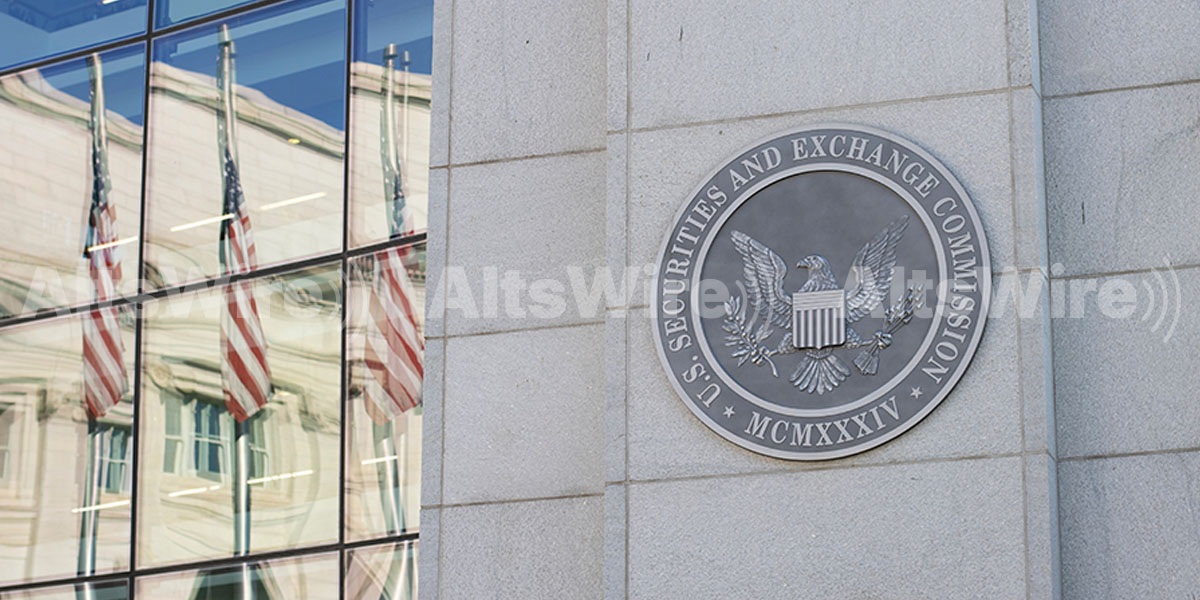
The U.S. Securities and Exchange Commission on Oct. 9 proposed amendments to its cross-trading rule that would again let registered funds trade most fixed-income securities with affiliated funds and accounts. The proposal would keep out securities valued with significant unobservable inputs, a category that accounts for a large share of the assets held by interval funds, tender-offer funds, and business development companies. The SEC asked for comment on whether some level 3 securities should be eligible.
The proposed changes to Rule 17a-7 under the Investment Company Act of 1940 would extend cross-trading eligibility to securities valued using observable inputs, known as level 2 inputs under U.S. generally accepted accounting principles. Securities valued using level 3 inputs, which rely on significant unobservable assumptions, and non-leveled assets such as private fund shares valued at net asset value would remain ineligible.
The SEC’s 2020 fund valuation rule, Rule 2a-5, adopted a definition of “readily available market quotations” that in practice excluded most fixed-income securities from cross trading. Those securities generally have not been eligible since Sept. 8, 2022, the rule’s compliance date.
“When executed appropriately, cross trades allow registered funds to avoid costs associated with open market trades and to then pass those savings on to investors,” said SEC Chair Paul S. Atkins.
The SEC estimated the amended rule would produce about $173 million a year in transaction-cost savings. Fund complexes cross traded more than $204 billion in fixed-income securities in 2020, saving funds and their shareholders nearly $329 million, according to “Rule 17a-7 at the Crossroads: The Right Path Forward,” a 2021 Investment Company Institute report based on a survey of 52 member firms. The ICI asked Atkins in an August 2025 letter to revise the rule so registered funds could resume cross trading fixed-income securities.
The Level 3 Line
The level 3 exclusion falls hardest on the alternatives market. Registered closed-end funds, the category that includes interval funds and tender-offer funds, held about $242 billion, or roughly 38%, of their $637 billion in gross investments in level 3 or non-leveled assets as of September 2025, according to “Registered Fund Statistics,” a report by the SEC Division of Investment Management’s Analytics Office that reflects filings received through Jan. 29, 2026. Mutual funds held about 1.4% of their investments in those categories, and ETFs held less than 0.1%.
BDCs are not registered funds, but they may rely on Rule 17a-7 under a provision of the ’40 Act until the SEC adopts BDC-specific rules. Because BDCs “generally hold significant level 3 assets,” the amendments “may not materially expand the set of transactions available to BDCs,” according to the SEC.
The commission asked for public comment on whether it should allow cross trades in “all or certain types of level 3 securities,” and, if so, whether additional conditions should apply, such as trade-by-trade approval by a fund’s independent directors. The SEC said it considered permitting cross trades in any security but that doing so could increase the risk of pricing differences that shift value between participating accounts. That approach would have had “the greatest incremental effect on BDCs,” according to the commission.
New Conditions and Reporting
The proposal would replace the rule’s prescriptive pricing conditions with two options: the value determined in the fund’s next net asset value calculation on the day of the trade, or a price the fund’s adviser determines reasonably represents the current market price using unaffiliated pricing sources. The SEC said the second method could help funds that do not calculate net asset value daily, such as some closed-end funds, cross trade on days they do not strike a NAV.
A fund’s adviser would have to determine before each cross trade that the transaction is in the best interest of each participating fund. Fund chief compliance officers would have to review cross trades quarterly and back-test them annually, including analyzing the prices ultimately realized when securities bought in cross trades are sold, and report the results to the fund board. The proposal would also permit de minimis payments to unaffiliated parties for clearing, settlement, and custody services.
Registered funds that cross trade would report aggregate cross-trading activity by asset class in their monthly portfolio holdings reports to the SEC. BDCs do not file those reports and would not be covered, leaving their cross-trading activity “outside the scope of structured public reporting,” the commission said.
The proposal would give larger fund complexes – those with $10 billion or more in net assets – 12 months to comply after adoption, and smaller entities 18 months.
The proposal follows a package the SEC proposed Sept. 30 that would let advisers charge performance fees to regulated funds, loosen interval fund repurchase rules, and codify multiple share classes for closed-end funds.
The comment period will remain open for 60 days after the proposal is published in the Federal Register.
Visit the AltsWire directory page.