
SEC, CFTC Sign Historic Cooperation Pact to Modernize U.S. Financial Markets Oversight
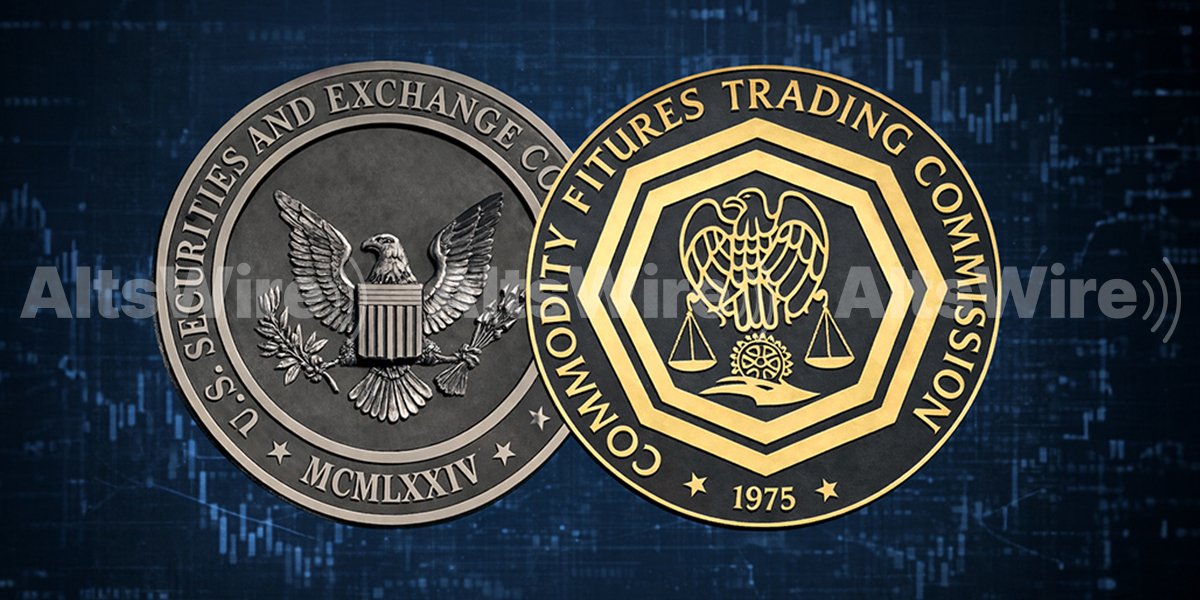
In a landmark move aimed at ending decades of jurisdictional friction, the U.S. Securities and Exchange Commission and the U.S. Commodity Futures Trading Commission signed a comprehensive memorandum of understanding to harmonize the regulation of the United States’ rapidly evolving financial markets.
The agreement marks a strategic shift toward “modernized coordination” intended to support lawful innovation while upholding rigorous market integrity and investor protection.
The MOU establishes a collaborative framework to address a “convergent financial ecosystem” where digital infrastructure and automated, onchain systems frequently blur traditional jurisdictional lines. Key to this partnership is the rejection of a “turf war” mentality in favor of functional, risk-based regulation.
“For decades, regulatory turf wars … have stifled innovation and pushed market participants to other jurisdictions,” said Paul S. Atkins, SEC chairman. “This updated MOU will serve as a roadmap for a new era of harmonization … [to] deliver the clarity market participants deserve.”
CFTC Chairman Michael S. Selig echoed this sentiment, stating the pact would “eliminate duplicative, burdensome rules and close gaps in regulation” to help “usher in a Golden Age of American finance.”
In conjunction with the MOU, the agencies launched the Joint Harmonization Initiative, a senior-level coordination process co-led by Robert Teply of the SEC and Meghan Tente of the CFTC. The initiative will focus on six critical areas of common interest and policy:
- Crypto and emerging tech: Providing a “fit-for-purpose” regulatory framework for crypto assets and novel technologies;
- Product definitions: Clarifying definitions through joint interpretations and rulemakings to provide regulatory certainty;
- Dual-registration efficiency: Reducing frictions for exchanges and intermediaries that are currently required to register with both agencies;
- Data sharing: Facilitating seamless and secure data exchange regarding market activities and specific incidents;
- Modernized frameworks: Updating clearing, margin, and collateral requirements; and
- Coordinated enforcement: Aligning cross-market examinations, surveillance, and enforcement actions to ensure proportionality and avoid duplicative relief.
Beyond policy alignment, the agencies have committed to practical operational integration. This includes cross-training staff, detailing personnel between agencies, and coordinating the procurement of onchain market data and analytical tools to ensure responsible stewardship of taxpayer resources.
The MOU also outlines a “minimum effective dose” regulatory strategy, emphasizing a commitment to efficient compliance that respects individual liberty and enhances U.S. global competitiveness.
Effective immediately, this agreement supersedes the previous coordination MOU signed in July 2018. Both parties intend to conduct periodic reviews of the partnership to ensure it remains effective as market conditions change. The agencies also encourage public input, which may be submitted through the written input form or a meeting request.
Click here to visit the AltsWire directory page.