New Opportunity Zone Map Shrinks 25%; 39% in Rural Tracts
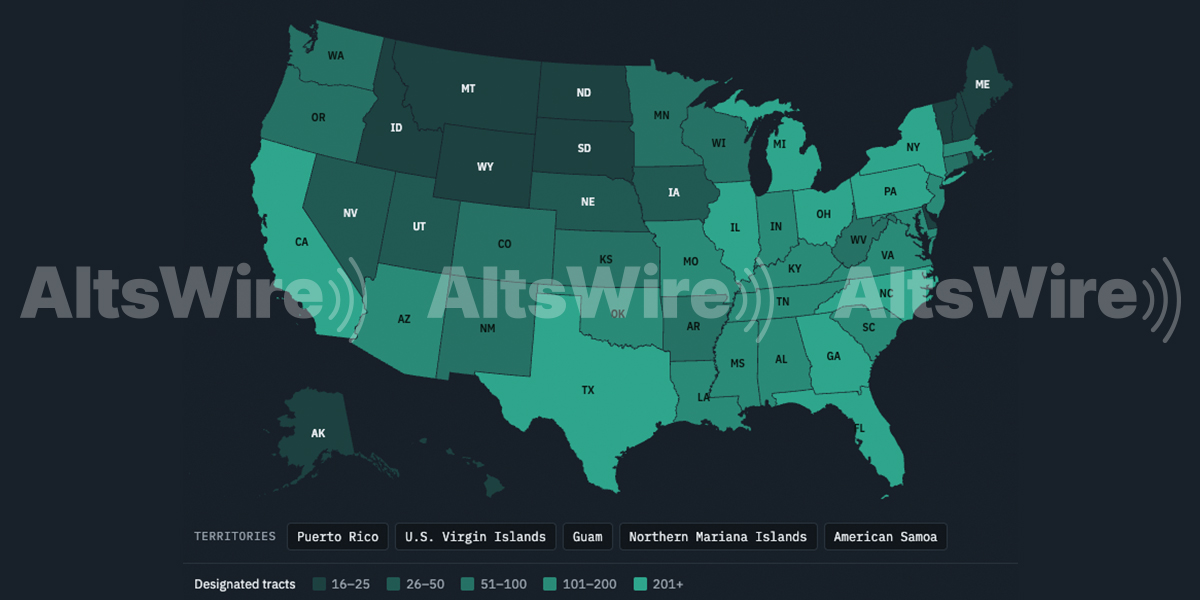
The U.S. Department of the Treasury and the Internal Revenue Service on Nov. 5 designated 6,576 census tracts as qualified opportunity zones, or QOZ, setting the map for qualified opportunity fund investment through 2036. A detailed, interactive map of the newly confirmed OZ zones is available at altswire.com/oz-map.
The designations take effect Jan. 1, 2027, and run 10 years. They cover all 50 states, the District of Columbia, and five U.S. territories. Of the 6,576 tracts, 2,594, or 39%, are in rural areas eligible for enhanced benefits under the 2025 tax law that made the opportunity zone incentive permanent and created a process for redesignating zones every 10 years. The administration refers to the law as the Working Families Tax Cuts.
Treasury designated every tract that governors and the mayor of the District of Columbia nominated during the statutory window, according to the department and IRS. Nominations were drawn from 25,332 eligible tracts that Treasury and the IRS published in April, 8,334 of them rural. The agencies said an additional 130 eligible tracts, 28 of them rural, were nominated during the window, which opened July 1.
“Today’s announcement of the new designations will help direct private investment to these communities, expand economic opportunity, support job creation, and unlock long-term growth in these communities across the country,” said Treasury Secretary Scott Bessent.
A Smaller Map
The new map is roughly 25% smaller than the first round. Treasury certified more than 8,700 tracts as opportunity zones in 2018 under the Tax Cuts and Jobs Act of 2017. Those original zones remain in effect through Dec. 31, 2028, creating a two-year overlap with the new designations. Fundraising slowed in late 2025 as the industry braced for a 2026 “dead period” between the two schedules.
California has the most designated tracts, with 620, followed by Texas with 608, New York with 430, Florida with 342, and Ohio with 260, according to AltsWire’s analysis of Treasury’s list.
Rural tracts account for most designations in several states. All 52 of West Virginia’s designated tracts and all 24 of Vermont’s are rural, as are 85 of South Carolina’s 113 and 90 of Kentucky’s 137. Every tract designated in Guam, the Northern Mariana Islands, the U.S. Virgin Islands, and American Samoa is rural.
A state-by-state breakdown appears at the end of this story.
Why the Rural Split Matters
Under the 2025 law, investors in qualified rural opportunity funds receive a 30% basis step-up on deferred gains when the investment is held at least five years, compared with 10% for other qualified opportunity funds. Sponsors have already built products around the distinction. As AltsWire previously reported, Peakline Real Estate Funds is targeting $1.3 billion for its fourth program, split between a metro fund and a rural fund, and The Wyoming Reserve has opened an escrow option that lets investors commit capital before the new rules take effect.
The final list gives sponsors, and the advisers and broker-dealers who conduct due diligence on their offerings, the tract-level detail needed to confirm which properties and businesses will qualify.
Treasury said private investment in opportunity zones has totaled more than $110 billion since the incentive was created in 2017. The full list of designated tracts and a map are posted on the website of Treasury’s Community Development Financial Institutions Fund, or CDFI Fund.
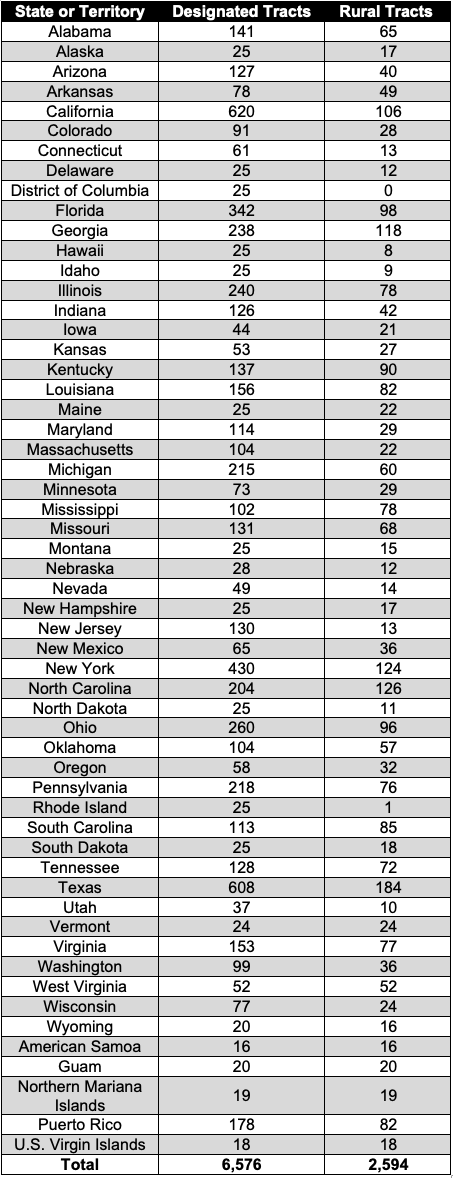
Source: AltsWire analysis of Treasury’s Nov. 5, 2026, designated QOZ list.
Visit the AltsWire directory page.