
Alternative Investment Back-Office Themes for the Remainder of 2025
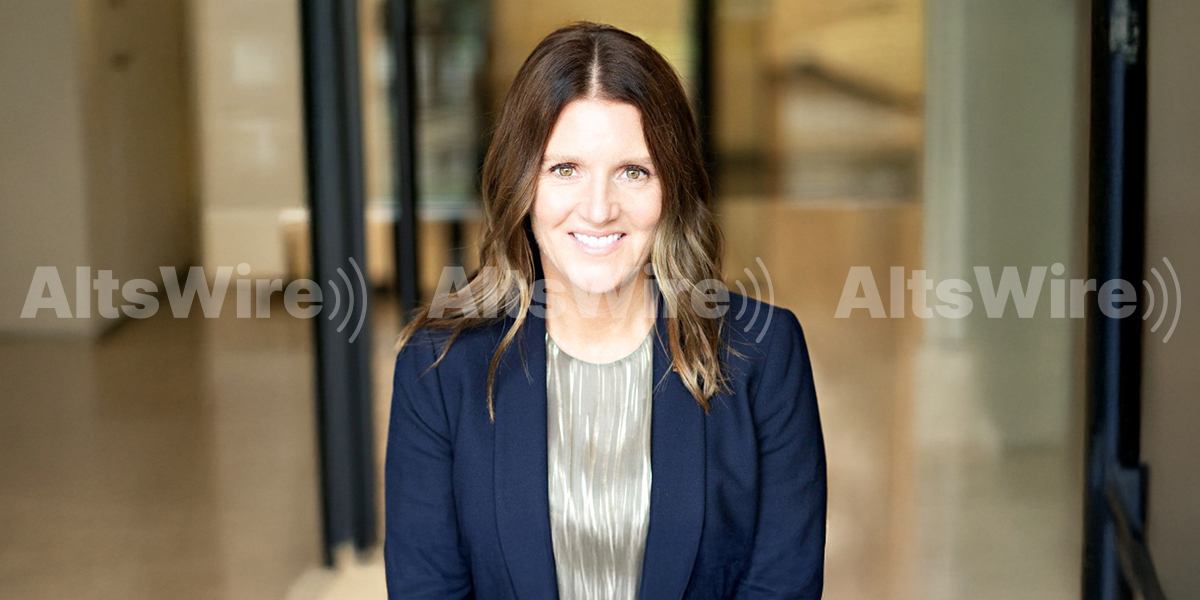
By Jill Calton, Executive Vice President, Executive Director of Alternative Investments, UMB Fund Services
Last year at this time, the alternative investment industry was focused on the potential expansion of the Custody Rule, which might have fundamentally reshaped the operational infrastructure supporting private fund administration. As things evolved, that didn’t happen.
But 2025 has brought something just as impactful: broadening access to traditional private investments as opposed to only semi-liquid products offered in registered-fund wrappers, such as interval funds.
The semi-liquid evolution has shown that investment firms and their service providers can effectively serve retail investors – though operational challenges still apply, especially at larger scale. Here are thoughts on three major themes for back-office operations managers in the alternative investment industry, from our perspective as fund accountants and administrators.
- Broadening Market Access
The August 2025 executive order, Democratizing Access to Alternative Investments for America’s Workers, has the potential to dramatically increase the volume and complexity of alternative assets held by retail investors. The order directs regulatory authorities to develop rules that would open the defined-contribution plan marketplace to private investment firms.
The Equal Opportunity for All Investors Act – passed by the House and under consideration in Senate committee – would, if passed, further broaden market access by creating more ways for retail investors to qualify for participating in alternative investment products. Traditionally, investors have had to meet asset-level thresholds. Under the pending legislation, they could also demonstrate market awareness by taking an exam.
For the industry, broadening access means more product launches, and more demands on service providers to handle unique liquidity and valuation needs while complying with shifting regulations. We are cautiously optimistic about the expansion opportunities, while recognizing the importance of protecting retail investors.
For operations professionals, a potential swell in private-fund assets under management means additional pressure to grow beyond manual onboarding, recordkeeping, accounting and administrative processes. In our experience, private funds that serve retail investors count on tight technology integration, including real-time performance data, and retail-grade interfaces. The demand for real-time data and transparency is already vastly greater than 10, or even five, years ago.
Especially with outsized growth potential, we believe private fund managers will be focused on ensuring that interactions with service providers are as easy as possible. Our own technology investments align with this need, such as application programming interface, or API, connections and shared-data rooms to facilitate investor onboarding, which is typically the administrative aspect that presents the greatest scalability challenges. Capital calls can also be especially challenging operationally. It’s even possible that certain processes simply cannot be scaled effectively, and progress will require new approaches, such as tokenization.
In addition to gaining new efficiencies, we anticipate a need to help asset managers educate retail audiences about how products work – for example, what to expect in reporting and when to expect receipt of tax forms and other documents – throughout the products’ lifecycles.
- Continuing Popularity of Private Credit
Private credit is not a new theme, but its unique demands combined with the potential for further acceleration in its growth make it a major focus area for private fund managers and service providers. It’s also a focus area for the U.S. Securities and Exchange Commission Division of Examinations this year – likely because of its popularity and complexity – according to its 2025 examination priorities.
Handling private credit requires advanced document management and rigorous attention to custom terms. Valuations, which sometimes vary substantially among many holders of the same credit, add to the operational demands. Disclosure requirements can be especially high when investment firms manage both debt and equity in the same capital structure.
For service providers, private credit requires specialized workflows while also staying highly adaptable. In our experience, it’s especially helpful with complex products for team members to be familiar with a product from top to bottom, as opposed to only handling one aspect of its lifecycle, such as investor onboarding or document management. We have also seen managers benefit by drawing on expertise across our organization. For example, some credit products require collateral management of complex loan portfolios, which may be best handled by trust and agency experts in collateralized loan obligation and other structures.
- Form PF Compliance
The SEC’s Form PF amendments, with the compliance date of Oct. 1, 2025, require investment managers to disclose substantially more information than previously. These changes demand separate reporting for master-feeder structures, parallel funds and trading vehicles, while enhanced disclosures include strategy details, exposure breakdowns, and trading/clearing mechanics for both large and small hedge funds.
Preparing to file Form PF can be quite time-intensive, and the new SEC requirements significantly add to this burden. The amendments require more details about strategies, exposure, trading and clearing mechanics from hedge funds of all sizes. Fund-of-funds must now include private fund investments in AUM calculations, affecting reporting thresholds and compliance obligations. Large hedge funds and liquidity funds face more frequent, detailed quarterly filings rather than annual submissions.
Our approach is to make the process as easy as possible by providing data feeds capable of populating browser-based software solutions designed for Form PF compliance. We also provide multiple validation checkpoints before adviser signoff.
The Technology Imperative
Running through all these major themes is the need for adaptable technology. In our experience, people matter the most – no question. But next comes technology, which needs to adapt to investment managers’ specific business needs. This is only possible on a technology platform that can accommodate all fund types in one system while emphasizing connections to third parties.
As investment managers seek opportunity in a broadening landscape, there’s a demand on everyone involved to meet the needs of retail investors and their wealth managers, increase efficiency with volume while also attending to product characteristics that can be highly complex. To best serve their clients, investment managers are seeking more and more awareness of workflows, rather than just receiving the outputs at the end of a process. To meet these needs, we are continuing to make technology investments into existing systems and to explore potential new solutions, including AI tools.
We may see a watershed moment as regulatory rulemaking follows the recent executive order and legislation and sheer popularity contribute, too, to private-investment opportunity.
Jill Calton is executive vice president, executive director of alternative investments at UMB Fund Services. She provides leadership and oversight to all of the company’s alternative investment client-servicing teams.
The views and opinions expressed in the preceding article are those of the author and do not necessarily reflect the views of AltsWire.
For more UMB news, please visit their directory page.