SEC 2027 Exam Priorities Put Private Credit, BDCs, Interval Funds in Focus
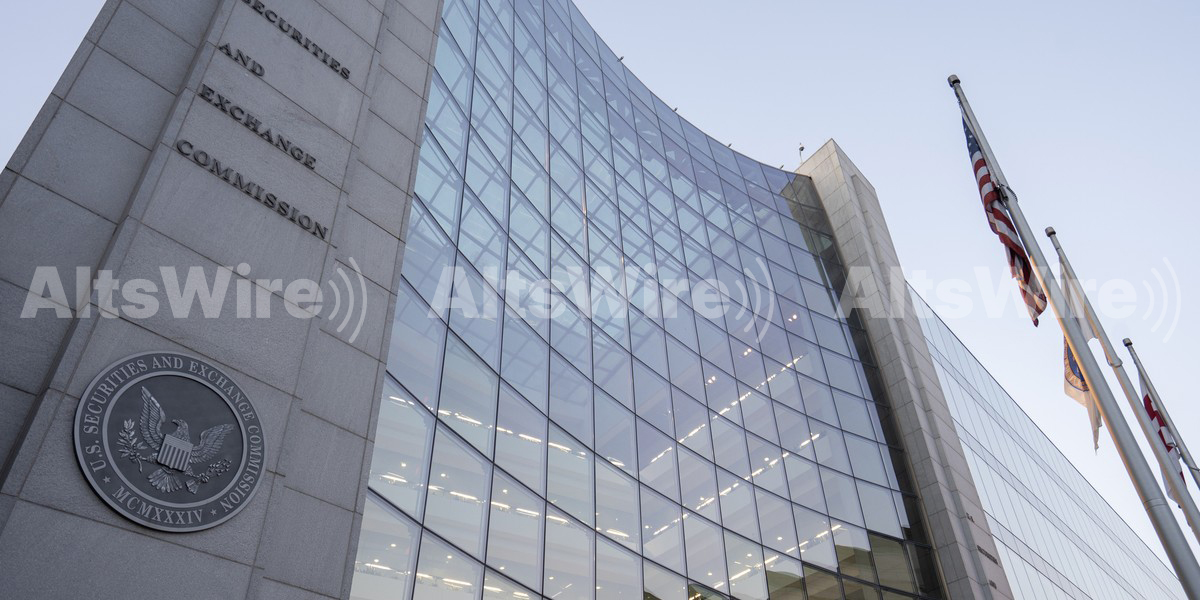
The U.S. Securities and Exchange Commission’s Division of Examinations will prioritize investment advisers that recommend products that are hard to trade, illiquid, or have unusual features in fiscal year 2027. Among the alternative investments the division named are loans provided by private funds or business development companies and investments in private companies through special purpose vehicles.
The division released its FY 2027 examination priorities Oct. 23, weeks earlier than the 2026 priorities, which were published in November 2025. The report identifies areas the division believes present heightened risks to investors or market integrity across its more than 34,000 registrants, including investment advisers, investment companies, and broker-dealers.
“Examinations provide critical insight into emerging risks, evolving business practices, and market developments across our financial system,” said SEC Chairman Paul S. Atkins. “Through a rigorous and analytically-driven program, the Division helps strengthen compliance, support the integrity and resilience of American capital markets, and reinforce investor confidence.”
The SEC’s announcement lists retail investor protection, “particularly regarding complex, higher-risk, and illiquid products,” among its key focus areas, along with private funds, private credit, and other complex investment strategies.
The priorities arrive three weeks after the commission voted Sept. 30 to propose loosening interval fund repurchase rules, codifying multiple share classes for closed-end funds, and allowing advisers to regulated funds – defined as registerd management investment companies and BDCs – to charge performance fees, a package the agency framed as expanding retail access to private market strategies. That proposal would also rescind existing exemptive orders covering interval funds and closed-end multi-class arrangements.
Private credit has drawn sharper regulatory attention throughout the year. In May, Atkins said the SEC was investigating fraud allegations in the private credit sector, though he did not identify any firms.
Advisers and Illiquid Products
Under its review of advisers’ fiduciary obligations, the division will assess whether the characteristics of recommended products align with client profiles, objectives, and risk tolerance. Factors examiners will weigh include liquidity, volatility, projected performance across market conditions, time horizons, and costs, including exit costs. Examinations will pay particular attention to unique product features that could affect suitability or performance.
For advisers to private funds, examiners will review risk disclosures and whether compliance controls address both fund-level and investment-level risks. The report cites disclosures related to investment allocations, use of debt and fund-level lines of credit, use of affiliated service providers, and the accuracy of fee and expense calculations at both the fund and investment levels.
The division will also prioritize economic conflicts of interest, including fee rebates, fee and expense calculations, cash management, and quid pro quo arrangements. That emphasis follows a June 9 risk alert in which the division detailed undisclosed or inadequately disclosed conflicts it had observed at advisers.
Examiners will also assess whether compliance programs have kept pace at advisers that have changed their business models, begun advising on new asset classes, grown through mergers or acquisitions, or operate from multiple geographically dispersed branch offices.
Registered Funds Holding Private Credit
Among registered investment companies, a category that includes interval funds and tender-offer funds, the division will monitor funds holding complex products and less liquid or illiquid investments, including private credit, with attention to valuation, redemptions, and disclosure of conflicts and risks. In the same section, the report also flags funds with leverage vulnerabilities that use novel or complex strategies, naming BDCs alongside inverse and leveraged ETFs. It also flags registered funds operating under exemptive orders for review of their compliance with those orders.
The focus lands as semi-liquid credit vehicles work through elevated redemption demand. Third-quarter repurchase requests at net asset value BDCs totaled $13.8 billion, or 11.5% of estimated tender offer NAV, leaving about $8.2 billion unmet, according to investment banking firm Robert A. Stanger & Co. Through August, credit interval fund redemptions rose nearly 89% year over year to $9.6 billion, equal to 79% of the category’s gross sales, Stanger reported.
In August, the SEC created a Financial Reporting and Accounting Unit within its Division of Enforcement to pursue accounting and financial reporting fraud. The agency did not say whether the unit’s mandate would extend to valuation practices at nontraded vehicles.
Broker-Dealers and Reg BI
For broker-dealers, Regulation Best Interest examinations will focus on recommended products that are complex, carry heightened risk, or represent a growth area for retail investment. The report’s list of products of particular interest includes private placements, alternative investments, and exchange-traded funds or other products that invest in illiquid assets such as private equity or private credit.
The broker-dealer review comes as placement agents prepare for a change in how they can market private offerings. On Oct. 15, the SEC approved an amendment to Financial Industry Regulatory Authority Rule 2210 allowing broker-dealers to include projected performance or targeted returns in communications, subject to conditions that include written policies defining the intended audience. Reg BI applies on top of those conditions when such a communication accompanies a recommendation to a retail customer. The amendment takes effect on a date FINRA has yet to announce.
Examiners will also review recommendations that move an investment into a substantially similar product, recommendations made to older and vulnerable investors and those saving for retirement or college, and conflict management at dual registrants. Separately, the division will review how broker-dealers supervise compensation paid to unregistered persons who may be acting as finders, as well as transaction-based compensation paid to personal-service entities not registered as broker-dealers.
In trading-related exams, the division will review broker-dealers’ pricing and valuation of illiquid instruments, such as private credit and private equity.
Technology and the Year Ahead
The report’s technology sections address artificial intelligence, what the division calls super intelligence, noting registrants’ growing use of the technology in research, client communications, portfolio management, and compliance monitoring. Examiners will review policies for monitoring its use, including in anti-money laundering and Reg BI compliance, as well as firms’ preparation for cyberattacks that use it. As in the 2026 priorities, the report includes no standalone section on crypto assets; tokenization appears in sections on market infrastructure and clearing agencies.
“Our approach enables us to adapt to changing market conditions, identify developing risk patterns, respond to emerging threats, and anticipate areas where investors and the markets may be vulnerable,” said Keith Cassidy, director of the Division of Examinations.
The priorities represent the views of division staff, not the commission, and carry no legal force. The division said the list is not exhaustive and that its focus may shift in response to market events, investor concerns, and new products.
Visit the AltsWire directory page.