SEC Advances Rule to Open Private Markets to Retail Investors
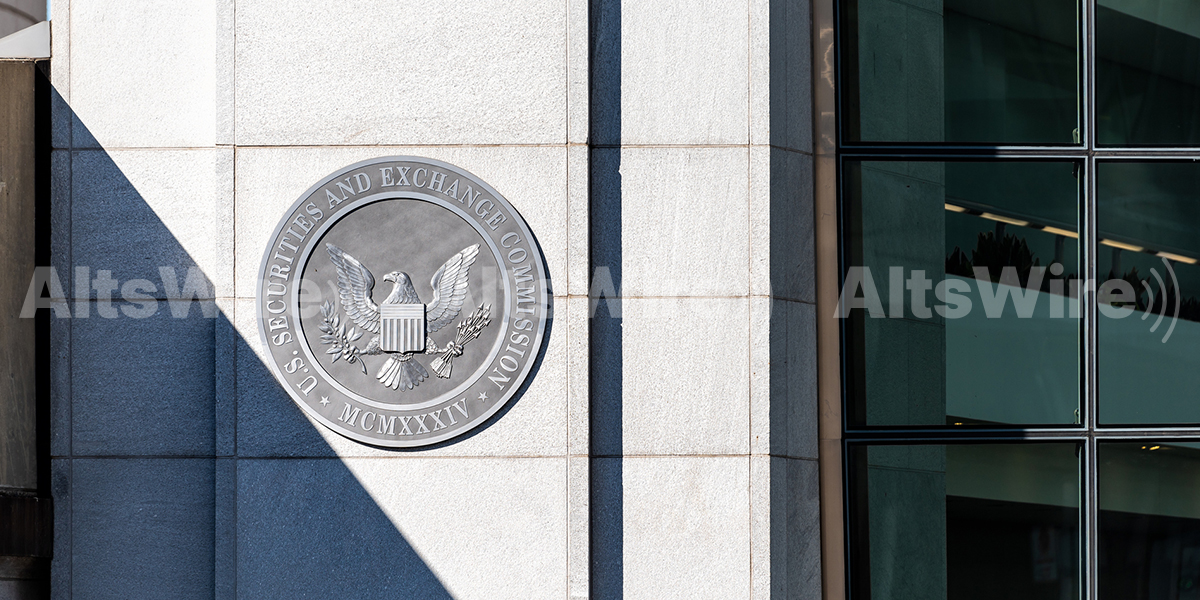
The U.S. Securities and Exchange Commission has sent a proposed rule to the White House Office of Management and Budget that would expand retail investors’ access to private markets and let investment advisers charge performance fees to a broader set of clients.
The proposal, titled “Enhancing Retail Exposure to Private Markets” and designated RIN 3235-AN59 in the federal rulemaking database, is listed at the proposed-rule stage of the SEC’s regulatory agenda and classified as economically significant. The SEC’s Division of Investment Management is “considering recommending that the commission propose amendments to existing rules and/or propose new rules” under the Investment Advisers Act of 1940 and the Investment Company Act of 1940 “to better facilitate retail investor exposure to private markets through registered investment companies and to allow investment advisers to charge performance fees to an expanded set of clients.”
“This is an encouraging step toward modernizing rules that have too often limited individual investors’ ability to build genuinely diversified portfolios. The growth of private markets has fundamentally changed the investment landscape, but the regulatory framework governing access has not kept pace,” said Anya Coverman, president and chief executive officer of the Institute for Portfolio Alternatives.
The agency’s target timetable calls for a notice of proposed rulemaking in October. Once OMB completes its review, the SEC is expected to release the proposal for public comment before incorporating that feedback into a final rule, which would require another commission vote.
“We look forward to reviewing the SEC’s proposal when it is released. The goal should be to expand access responsibly so that more investors can benefit from the same breadth of investment opportunities long available to institutions and the wealthiest individuals,” Coverman said.
The move builds on priorities the SEC laid out earlier this year. In its draft strategic plan for fiscal years 2026-2030, as AltsWire reported, the agency named expanding private markets access and enabling new capital-raising pathways among its central goals, alongside a shift in enforcement priorities toward violations of established law and a broader modernization push covering EDGAR and artificial intelligence. That plan, which set a July 2 public comment deadline, pledged to provide “meaningful pathways for entrepreneurs to access capital in both private and public markets” – a commitment the OMB submission now begins to translate into an actual rule.
Investment advisers are currently limited to charging performance fees only to qualified clients, a standard the SEC raised earlier this year, lifting the assets-under-management threshold to $1.4 million and the net-worth threshold to $2.7 million.
SEC Chair Paul Atkins has framed broader retail access as a matter of freedom and fairness and described the effort to widen access while preserving investor protections as a continual act of calibration.
Visit the AltsWire directory page.