
Wealth Platforms Need to Focus on Opportunity Zone Funds Now
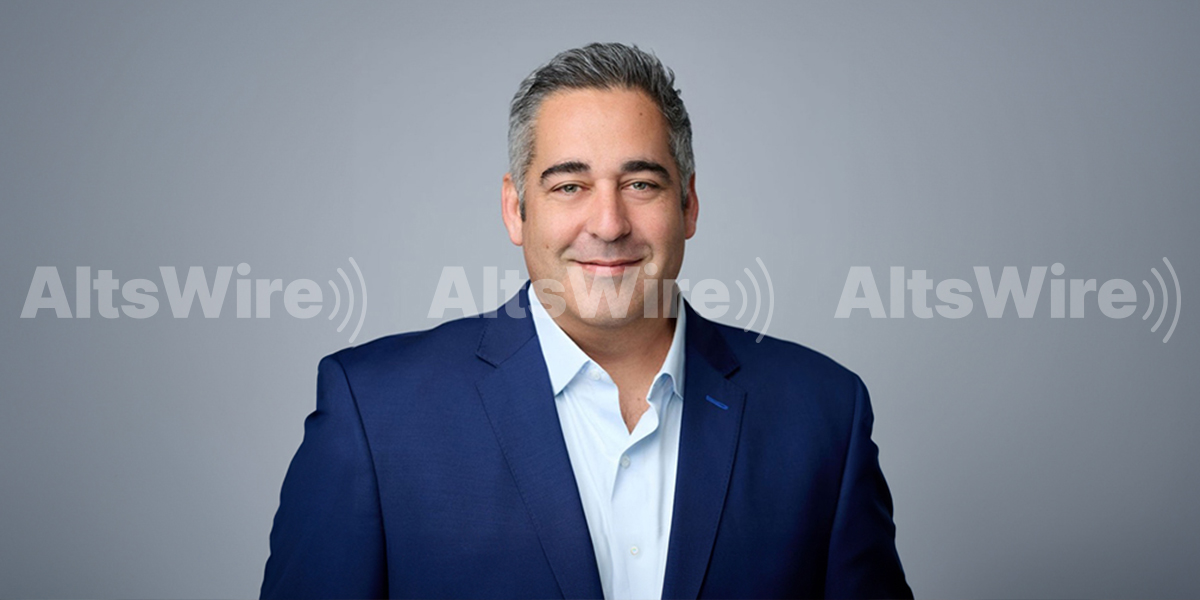
By Nick Rosenthal, Co-Chief Executive Officer, Griffin Capital Company
As the original opportunity zone program approaches its Dec. 31, 2026, transition to a permanent, modernized framework beginning in 2027, commonly referred to as “QOZ 2.0,” wealth platforms, investment professionals, and investors are entering an important planning window.
For wealth platforms and advisers serving clients with embedded capital gains across investment portfolios, privately held businesses and real estate, the period between now and the end of 2026 represents a critical time for education, planning, and platform positioning.
Understanding the distinctions between the current program and the QOZ 2.0 framework will be essential to delivering appropriate guidance and investment solutions both now and in the years ahead.
The Core Value Proposition Remains Intact
At its foundation, the opportunity zone program provides three primary tax-related benefits:
- Deferral of capital gain recognition for a defined period;
- Elimination of capital gains taxes on opportunity zone appreciation after a 10-year hold; and
- The ability to generate depreciation-driven tax losses without recapture.
While the original program’s deferral period is nearing its conclusion, the largest economic component of the opportunity zone benefit has always been the potential for long-term tax-free growth. That benefit remains fully intact for investors today.
Under the current framework, investors can still:
- Access defined census tracts and established investment pipelines;
- Invest in portfolios that have potentially moved beyond early-stage development risks; and
- Qualify for tax-free growth on future appreciation.
For many investors, participation in an opportunity zone strategy is driven primarily by the timing of liquidity events rather than statutory deadlines. When a gain is realized through the sale of a business, real estate or securities, the applicable investment window often dictates timing considerations more than the legislative calendar.
A common misconception is that investors should simply wait for QOZ 2.0. In practice, both programs offer meaningful benefits, and the appropriate path is typically dictated by the timing, type, and magnitude of the gain. Wealth professionals should understand these nuances, and platforms should begin developing both educational resources and investment solutions in advance of the transition.
QOZ 2.0: A Permanent, More Flexible Framework
Beginning Jan. 1, 2027, the opportunity zone program transitions to a permanent structure with several notable enhancements:
- A rolling five-year capital-gain deferral based on each investor’s investment date;
- A reinstatement of the ability to reduce the amount of gain subject to tax at the end of the deferral period (10% standard, 30% rural);
- Tax-free growth after a 10-year hold, with the ability to grow tax-free for up to 30 years; and
- Census tract redesignations every 10 years.
These changes address the fixed deferral date embedded in the original program and should support more significant and consistent capital formation, as no investor will be subject to diminishing tax benefits based on their investment date. The introduction of a rolling five-year deferral also provides investment professionals with a clear planning horizon, allowing for more deliberate tax-management strategies that can be paired alongside the opportunity zone investment.
The legislation further introduces rural opportunity zone funds, offering enhanced incentives designed to attract capital to structurally underserved markets.
Structural Considerations: LPs Versus REITs
Fund structure can materially influence after-tax outcomes, and wealth platforms should evaluate these differences when curating solutions.
Qualified opportunity funds structured as limited partnerships may pass through bonus depreciation and cost-segregation benefits, and generate passive losses that may offset other passive income.
By contrast, REIT or C-corporation structures generally cannot pass through losses to investors, and may produce taxable distributions before investor’s basis is established.
For investors seeking to maximize the benefit of the opportunity zone construct, partnership structures have historically offered more advantageous after-tax outcomes.
Diversification and Portfolio Construction
Diversified funds typically offer geographic and asset-level diversification, as well as more levers to manage risk across market cycles. These managers can adjust capital allocation as conditions evolve while single-asset capitalizations offer less margin for error.
Over a 10-year investment horizon, different markets will inevitably experience varying cycles of outperformance and underperformance. Wealth platforms and investors should align allocations with their risk tolerance and portfolio construction objectives.
Perpetual Versus Finite-Life Structures
While perpetual or evergreen vehicles may offer a vision of simplicity, the opportunity zone framework introduces nuanced complexities with consequences. Investors in a perpetual structure will have different 10-year holding periods, making asset-level liquidity decisions more challenging.
If a manager cannot sell assets without triggering adverse tax consequences for certain investors and must rely on leverage or new inflows to meet liquidity needs, the range of favorable outcomes may narrow. Finite-life structures may offer more direct alignment between asset-level decisions and investor tax horizons.
Implications for Wealth Platforms
The transition to QOZ 2.0 requires proactive planning across three areas.
Education
Gains realized in 2026 will follow defined planning paths or provide optionality depending on their structure and timing. Advisers and platforms must understand these distinctions to provide appropriate guidance.
Platform Curation
Firms should begin positioning QOZ 2.0 solutions, focusing on fund structure, sponsor experience, durability of the investment thesis, risk-return characteristics, and capacity discipline.
Implementation Timing
Although QOZ 2.0 formally launches in 2027, demand is likely to build throughout 2026 as planning conversations accelerate and investors seek to understand what their options may entail.
Conclusion
The opportunity zone program remains one of the more powerful after-tax planning tools available to investors with capital gains. As the program transitions to a permanent, more flexible structure, the planning process becomes more nuanced, not less.
For wealth platforms and professionals that invest in education and curate institutional-quality solutions, opportunity zones can serve as a meaningful component of long-term tax management, portfolio construction, and multi-generational wealth planning.
Nick Rosenthal serves as co-chief executive officer at Griffin Capital Company, where he is responsible for working directly with the firm’s executives across acquisitions, asset management, due diligence, product development, accounting, investor relations, marketing and equity sales. In this capacity, Rosenthal directs the firm’s strategic vision and advances key initiatives across the organization.
The views and opinions expressed in the preceding article are those of the author and do not necessarily reflect the views of AltsWire.
For more Griffin Capital news, please visit their directory page.