
Unpacking Investment Opportunities in Smaller-Scale Commercial Solar
By Zach Grabill, President, GeoFire Solar
The One Big Beautiful Bill Act, signed into law on July 4, will reshape commercial solar development in the United States. The shift threatens thousands of jobs and billions in investments and jeopardizes the nation’s clean energy transition and climate goals. It also leads to increased reliance on traditional energy sources and likely higher electricity bills.
Contrary to popular belief, however, the solar industry is not dead. It’s true, the passed legislation targets solar development by hitting the industry where it hurts: removal of valuable solar investment tax credits, or ITCs, which are worth as much as 50% of the fair market value of a project and are a critical component to the development capital stack.
But the bill also provides a runway for investing in future solar development. Smaller commercial solar projects, such as distributed generation systems and community solar programs, now have distinct advantages over large and utility-scale solar developments. Their typically shorter development cycles and simpler supply chains and comparatively streamlined interconnection processes could enable them to meet the bill’s strict deadlines and compliance requirements. Further, smaller-scale energy projects offer a pathway for broader investor participation in the renewable energy market even as large-scale projects face increased hurdles.
Critical Timelines for Commercial Solar Tax Credit Eligibility
Under prior law, all commercial solar projects placed in service by Dec. 31, 2032, would receive a baseline ITC of 30% of the development cost or, if step-up rules apply, the fair market value of a project. With domestic content and energy community adders, ITC values could reach as high as 50%.
The new law sets specific, accelerated deadlines that are crucial for commercial solar projects aiming to qualify for ITCs under sections 45Y and 48E of the Internal Revenue Code. All projects that begin substantial construction by July 3, 2026, will receive 100% of the available ITCs so long as the projects reach “placed in service” status. Projects that commence construction after July 3, 2026, must be completed and placed in service prior to Dec. 31, 2027.
The “grandfather rule” was included in the bill to protect eligibility for certain solar projects, exempting those that begin construction before July 4, 2026. For projects that meet this grandfathering criterion, there is no specific deadline for when they must be placed in service to claim full credit.
For solar projects that begin construction on or after July 4, 2026, the strict deadline of Dec. 31, 2027, applies for claiming solar ITCs. This means they must be fully operational and connected to the grid by the end of 2027, an extremely aggressive deadline considered “nearly impossible” by many. This could lead to a significant drop in new large-scale solar development, potentially resulting in a cliff of investment in the large-scale space.
Developing a utility-scale solar project – from initial planning to becoming operational – typically takes 5-10 years, with construction alone often taking 12-18 months. This creates a two-tiered market: in the short term, developers will likely rush to secure equipment orders and start initial site activities by July 3, 2026, to meet the grandfathering threshold.
Strategic Advantages for Smaller Commercial Solar Projects
While the bill presents challenges for the entire commercial solar sector, it actually creates an opening for smaller commercial projects, including distributed generation and community solar initiatives – uniquely positioned to continue thriving in the new regulatory environment.
For investors, the accelerated timelines and reduced ITC availability in the utility-scale space create both urgency and opportunity. Smaller commercial projects – particularly those that can reach substantial construction by July 3, 2026 – offer the potential to capture the full 30% federal ITC (or higher with adders) while avoiding the multiyear delays common in large-scale development. The comparatively short lead times mean capital can be deployed, projects placed in service, and cash flows initiated within 18–24 months, compressing the time horizon to achieve returns and improving internal rate of return, or IRR, potential.
Community solar programs are primarily state and local initiatives, and their structures and incentives are generally unaffected by the new law. Typically developed by utilities or third parties, they are overseen by state utility regulators or local boards with enabling legislation requirements varying by state. While federal tax credits can certainly enhance their financial viability, the core mechanisms of community solar – such as subscribers purchasing shares of a solar facility’s output to receive bill credits – operate independently of federal policy. Many states and utilities offer their own solar incentives separate from federal tax credits, and while these programs might be reevaluated, they are not directly affected by the new law.
Shorter Timelines
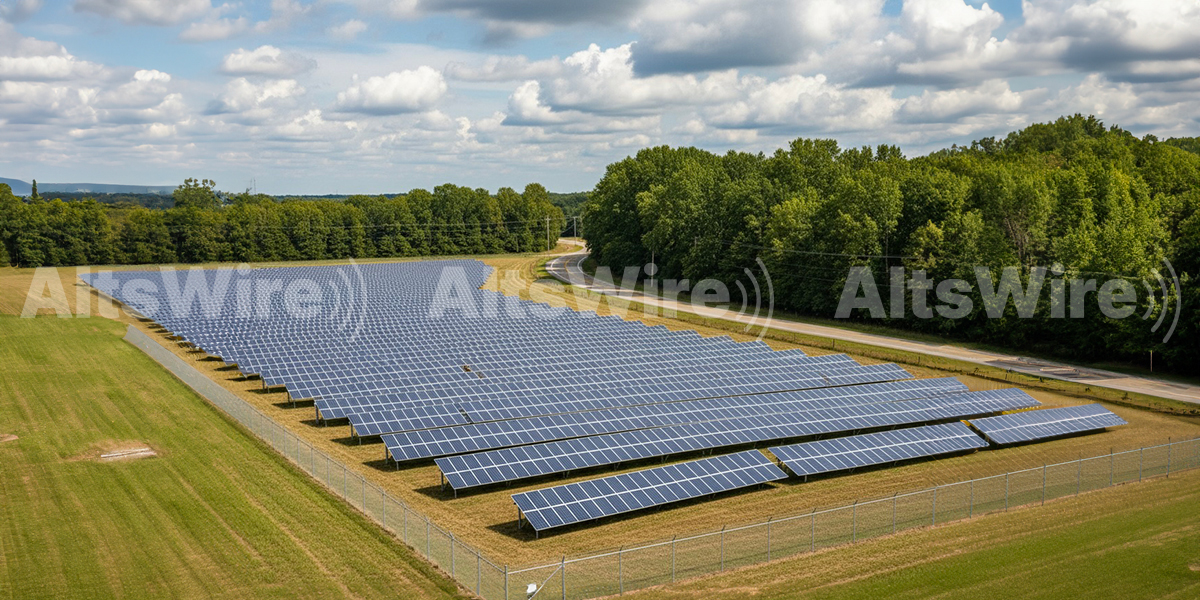
Smaller commercial solar projects, including community solar farms, e.g., 2-5 MW, generally have shorter development and construction cycles. A 2-5 MW solar farm might take 8-14 months for development and an additional 5-10 months for construction, depending on local permitting and interconnection processes. Thus, they can likely adapt to the Act’s accelerated deadlines and meet tax credit eligibility.
Because of these shorter timelines, developers and investors in smaller-scale solar projects are pouring capital. Community solar projects – despite the termination of the “Solar for All” grant program – may see new avenues emerge through legal challenges and state-level initiatives. Utility-scale solar projects, facing stringent new deadlines and Foreign Entity of Concern, or FEOC, restrictions are driving a rapid push for project completion and a strategic pivot toward domestic manufacturing and integrated energy storage solutions.
While the law is projected to impact overall U.S. electricity and clean fuels investment, it simultaneously carves out specific niches for astute investors. The short-term outlook for solar deployment, especially in utility-scale and adaptable community solar models, offers compelling opportunities for those prepared to navigate the new policy environment
Different Interconnection Dynamics
Connecting to the grid remains an obstacle for solar deployment. Larger projects connect to the high-voltage transmission grid, which is congested and often requires extensive upgrades. Average waits can be more than four years in interconnection queues, with only 19% of projects submitted between 2000 and 2023 actually becoming operational. Smaller commercial distributed generation systems typically connect to the local distribution grid at lower voltages. Interconnection can still be challenging, but the process for tackling hurdles is different and may facilitate faster integration into the grid.
- Local energy production reduces transmission losses and can improve a site’s reliability.
- Voltage deviation concerns exist but can be addressed with technology upgrades.
- Some regions allow the selling of excess electricity back to the utility, which is advantageous.
Lower Capital Investments
Utility-scale solar projects require substantial initial capital investment – often millions of dollars – covering land acquisition, equipment, installation, and ongoing operational costs. The long payback periods and significant financial outlays can deter investors, especially in an environment of reduced federal incentives and increased policy uncertainty. Smaller commercial projects generally require less upfront capital, making them potentially more attractive to investors and less financially risky if/when policies change.
Portfolio Rebalancing Strategies
A balanced renewable energy portfolio may now tilt more heavily toward distributed generation and community solar to take advantage of favorable ITC treatment and shorter execution risk. The elimination of certain large-scale project adders and the stricter domestic content rules mean developers with flexible supply chains and smaller site footprints are positioned to capture value that utility-scale developers may leave on the table. For yield-focused investors, locking in projects now that can clear permitting and interconnection by mid-2026 is critical to preserving tax-enhanced returns.
Localized Permitting and Community Engagement
Large utility-scale solar projects often face lengthy permitting processes at local and state levels, including extensive environmental and cultural studies, and can encounter significant public opposition to land use. Further, the Act’s termination of the energy community adder, which incentivized projects on contaminated sites, i.e., brownfields, disproportionately affects large projects that relied on these incentives to offset higher development costs.
Smaller commercial projects, particularly those on existing rooftops or within industrial zones, may face fewer land acquisition and permitting obstacles and a streamlined approval process. Community solar projects often garner local support due to economic benefits and less perceived environmental impact. Finally, smaller community solar projects, being less dependent on specific adders, will be less impacted by the bill’s regulatory changes.
Positioning for Short-Term Gains
In the short term, investor strategies may include securing early-stage projects in jurisdictions with strong state-level incentives, negotiating fixed-price EPC contracts to mitigate supply chain inflation, and leveraging the law’s 100% bonus depreciation to enhance first-year cash yield. Investors with access to tax capacity may find enhanced returns by combining ITCs, bonus depreciation, and long-term PPAs in markets with robust creditworthy off-takers.
Conclusion
In the immediate future, there will be a concentrated effort to qualify projects under the grandfather rule, which could strain supply chains and potentially increase project costs. Beyond that window, the viability of new utility-scale solar projects that depend on federal tax credits is limited, leading to a substantial slowdown in clean energy deployment.
While the One Big Beautiful Bill Act undeniably shifts the landscape for commercial solar in the United States, it does not have to spell the end of solar development. Instead, it necessitates a strategic pivot toward smaller-scale projects.
Community solar’s flexibility and lower risk profile positions it more favorably for continued development and investment in the challenging years ahead. Developers’ and investors’ understanding of market dynamics, adaptation, and compliance are essential for continued success.

Zach Grabill is president of GeoFire Solar LLC, a clean energy developer focused on delivering high-impact community solar solutions that create long-term value for customers, investors, and the environment. Grabill manages GeoFire’s real estate investment projects – with over 18.5 MW of community solar projects already underway in Maryland and Massachusetts and serving low-to-moderate-income households and small businesses – and product offerings, including GeoFire 2025 Income Fund. With over 20 years of legal expertise in real estate with a particular focus on 1031 exchanges and public and private real estate investment trusts, Grabill has overseen projects across the multifamily housing, healthcare, and industrial real estate sectors.
The views and opinions expressed in the preceding article are those of the author and do not necessarily reflect the views of AltsWire.
Click here to visit the AltsWire directory page.