Five Questions: Inland Investments CEO Matthew Fries on Transparency, RIAs, and Opportunity Zones
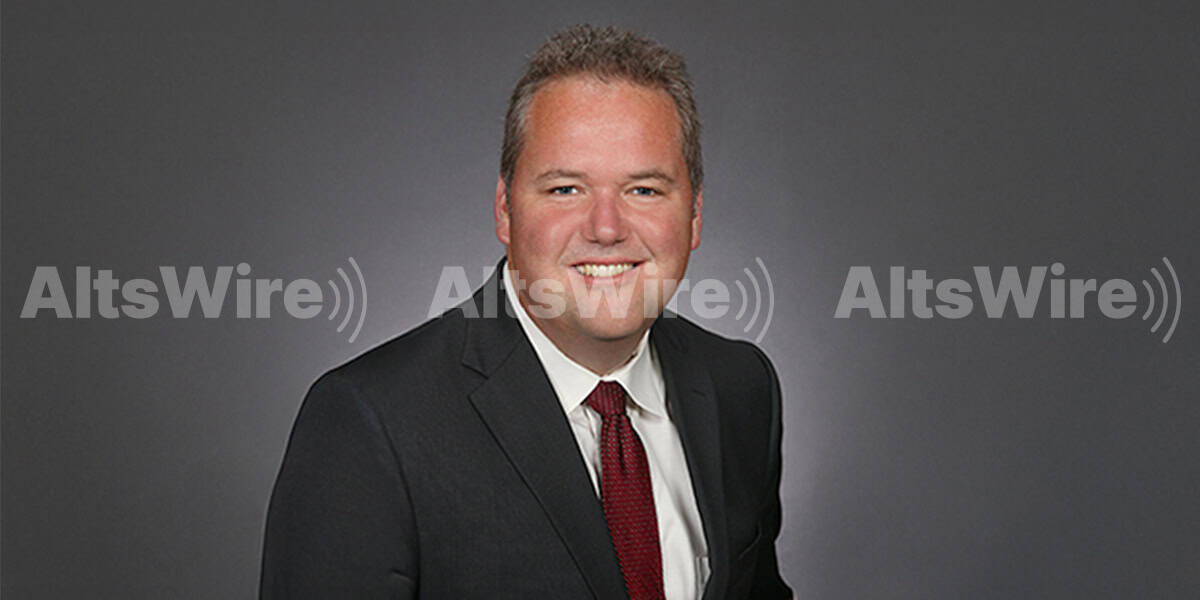
Matthew Fries, president and chief executive officer of Inland Real Estate Investment Corporation, the Inland affiliate that sponsors tax-advantaged real estate investments for retail investors, was named to the role in February after nearly three decades on the broker-dealer side of the business, most recently as head of investment products and partner solutions at Cetera Financial Group.
In this installment of AltsWire’s “Five Questions for…” series, Fries spoke with refreshing candor about the transparency lessons he brought from the gatekeeper side, how Inland is reorganizing in the wake of founder-level leadership changes, competition in the DST and 721 exchange markets, the firm’s plans for the newly permanent qualified opportunity zone program, and why registered investment advisers now account for about 30% of Inland’s sales. Responses have been edited for length and clarity.
AltsWire: Before joining Inland, you spent nearly 30 years on the wealth management side of the business, much of it deciding which sponsors’ products made it onto a major platform. Why make the move to the sponsor side now? And as a gatekeeper, what did you see sponsors consistently get wrong that Inland is now trying to do differently?
Matthew Fries: There were three reasons the move made sense when I made it. First, I knew Inland. During my 10 years at Cetera and eight years at Questar Capital – the broker-dealer that Allianz owned – we worked closely with Inland, so I knew a lot of the people and the capability set.
Second, Inland has an identity. It’s known for something, and that’s tax-favored investing. As you look at the competitive space, a sponsor needs to be competitive with firms such as Blackstone and Apollo, given their scale and capabilities. Because Inland has a known brand, that is we have an area where we’ve traditionally been one of the leading firms if not the leading firm, it makes it easier to compete with these larger firms as we seek to expand into other product lines beyond tax-favored investing.
Third, I spent my entire career on the broker-dealer side, and I loved it. But my kids are now all out of high school, so it felt like the right time to tackle something a little different and accept a new challenge.
As for what sponsors get wrong, transparency, or the lack of transparency, was always critical for us at Cetera and at previous firms. There’s sometimes a perception on the part of product companies that if something isn’t going the way you would expect, it’s better to hide it or not be upfront about it. My experience from a diligence perspective is that people understand things go wrong sometimes. We always valued the firms that were upfront about their challenges, that acknowledged there was an issue and explained what they were doing to address it, versus the firms that essentially waited for you to catch it and ask the question.
What we’ve done at Inland is be very open, tell people where things are, and make distribution adjustments when we need to, which is not always the easiest thing to navigate, but we believe that being honest and transparent is central to becoming a trusted relationship for our distribution partners.
We also reduced our asset management fees at the same time to foster a “we’re in this together” feeling.
AW: Inland has been through a generational leadership transition. Co-founder, chairman, and chief executive officer Daniel Goodwin died in January 2024, and Tony Chereso, then the firm’s chief financial officer, was named CEO. Co-founder G. Joseph Cosenza died in December 2024. What has changed at Inland, and what has stayed the same?
MF: Inland was founded by four individuals in 1968, and they had an amazing run of success. Dan Goodwin was the first among equals in that partnership. Tony had been brought in a couple of years before Dan passed, arguably to be groomed as the replacement. Then we lost Joe Cosenza as well. Those were traumatic losses for an organization that had gone 58 years under the tutelage of those four individuals.
The benefit the organization had when that leadership transition took place is that there was an opportunity to take a step back and assess what Inland has traditionally done really well, where Inland has perhaps not done as well, and what we could do differently. It probably would have been hard to have that conversation and come to different decisions when all four founders were with us. I think Tony has done a great job laying out a vision for the future of Inland, which is more diversified in terms of the areas we’re focused on.
Also, and this is really important, because of the way the company grew, there were a lot of silos, where one partner was responsible for this and another partner was responsible for that, and there wasn’t a ton of crossover. They had tremendous success for 58 years doing it that way. But the world is different now. We all need to be rowing in the same direction and working together to achieve our goals, and at least in my mind, and certainly in Tony’s mind, you can’t do that if fiefdoms have built up within the organization. One of the buzzwords you’ll hear quite a bit is “One Inland.” For me, it means we have a common set of goals. While I’m responsible for the retail business, I’m doing things that help our development company, our mortgage company, and the launch of our institutional business.
So what is the same? We’re still, as Tony likes to say, a vertically integrated real estate company, and we only play in those spaces. What is different is that we’re breaking down internal silos so we can be more effective going to market.
Then there’s diversification. For a long time, Inland was just real estate investment trusts with a retail focus. Then it became more of a DST story. Now we’re excited about the institutional business. We’ve launched our first institutional initiative, and we think that will be an important diversifier in terms of the customers we’re able to serve. We have an in-house development capability that has traditionally focused on friends-and-family money, and we’re bringing that to the retail marketplace. We also have a mortgage business that has traditionally operated on a friends-and-family basis, and we think there are opportunities to get it to a bigger scale.
In my area, retail, we love the DST space, and we want to continue to be a huge player in it. It’s in our DNA, and there is no chance we will move away from that business. We want to do qualified opportunity zones and we want to do development deals. I want our DST sales to grow, but I also want all of these other sales to become much more meaningful as a percentage of the whole.
AW: Competition in the DST and 721 exchange space has grown sharply in recent years, as large institutional managers have entered the market with 721 UPREIT programs that feed their perpetual-life REITs. At the same time, the DST space has traditionally been populated by dozens of smaller sponsors offering one deal at a time. How is Inland keeping its competitive edge, where do 721 transactions fit in your strategy, and do you expect the industry to consolidate?
MF: We completely recognize that we’re in a different competitive landscape, and we respect the capabilities of the new firms coming in. If we want to maintain our market share and our presence, we have to respond and do a good job.
A couple of things have helped Inland maintain its position. One is that we’re known within the industry as a firm that is always in the market. We have the financial wherewithal to maintain a pipeline, so at any given time we’ll have a DST solution in the marketplace, a 721 solution in the marketplace, and usually a couple of other things. Many of our competitors on the traditional side aren’t always in the market, and when they are, they tend to have smaller deals. For the 721 providers, it’s usually one deal at a time. So if you want any level of diversification, we become one of the firms people want to talk to. Being very focused on the types of assets we go after also helps. We have a defined buy box, for lack of a better term, in terms of the assets and locations we like, and we’re able to execute.
On 721s, we believe they offer advantages to certain types of investors, and we will continue to make 721 solutions available. But I’m of the opinion that the person who buys a 721 strategy is not the same person who buys a traditional DST. They have different motivations and are trying to achieve different things. We’ve been very vocal about the need to offer both, because ultimately the consumer is best served if they can choose between them, have a financial adviser walk them through the benefits of each, and make the decision that makes sense for them.
So we have two separate product lines. Our 721 solutions are a mandatory UPREIT: if the REIT’s board decides to exercise its purchase option, the DST investors will receive OP units. Our traditional DSTs have the typical seven- to 10-year time horizon, after which you would look to liquidate. There could be situations in the future where we opt to sell a DST property to a REIT and giving those investors the option to exchange their interests for OP units in lieu of cash proceeds, but we aren’t contemplating any type of mandatory conversion for our traditional DSTs. Those investors keep the optionality to go to cash or potentially take OP units. Any of our offerings with an alternative focus, whether self-storage, senior living or student housing, have that optional 721 strategy built in.
As for consolidation, I think there will always be room for some small solutions. But look at the space through the eyes of a financial adviser. They want to build relationships with firms that are going to be there when they need them, and the 1031 sale is such an episodic sale. While there will continue to be smaller firms dabbling around the edges, I think you’ll see continued consolidation of sales into the larger players. That’s one reason some of the 721 solutions have become more popular. It’s easier for those sponsors to always have something in the marketplace, the raises tend to be larger, and in some instances, the properties are coming from the existing portfolio anyway.
AW: The qualified opportunity zone program is now permanent, and the next iteration, often called OZ 2.0, takes effect in 2027 with tighter eligibility, a smaller map of qualifying tracts, and an enhanced basis step-up for investments in rural zones. How aggressive will Inland be in OZ 2.0, what are you hearing from advisers, and how are you approaching the rural incentive and the smaller footprint?
MF: We are incredibly excited about the opportunity this will bring. In the first iteration of QOZs, because it wasn’t a permanent solution, at least some advisers viewed it as a niche product they didn’t really need to explore, because it was only going to be available for a handful of years. Now that it’s permanent, we think more advisers will focus on it, because they know that if they spend the time to educate themselves, it’s going to be there.
The demand signals have been strong. We hosted a webinar with Baker McKenzie, a law firm we work with on our QOZ solutions, open to financial advisers and broker-dealer home offices. We had more than 500 registrations, which blew me away, and total attendance was still in the 400s. And believe me, I don’t think they were dialing in just to listen to me. We viewed it as an incredible indication that there is pent-up demand for this solution and a desire to learn more.
We’re seeing it in other ways, too. We know broker-dealers are lining up the firms they’re going to consider for QOZ. We’ve gotten a ton of inbound calls from distribution partners wanting to know what we’re doing, letting us know their timelines for reviewing products, and trying to figure out who’s going to be on their dance card. QOZ 1.0 got off to a really slow start, partly because of COVID and partly because people didn’t understand what it was. I don’t think that’s going to be the experience this time.
The additional step-up in basis for rural zones is, without question, attractive, and we are getting requests for it. But because the maps aren’t finalized yet, it’s hard. A rural fund has to be 100% rural; you can’t mix it with urban locations. So before we decide whether to offer one, we want to see the final approved [tracts] to make sure there would be enough opportunities. We will certainly look at it, and I’m sure lots of other firms will as well.
Structurally, I like the portfolio story. It helps from a diversification standpoint, letting you spread risk across geographic locations and asset types, and it gets you to a scale that’s more attractive to some of the larger distribution partners. But to begin with, the focus is on larger, multi-asset portfolios.
As for the smaller footprint, it will require sponsors to be more disciplined in their investing and underwriting. The biggest concern, and this was true in 1.0 as well, is that if the value of development opportunities gets bid up to the point that it becomes uneconomical to develop, you have to have the strength to say no and pass on that opportunity. You can’t do the deal just to say you have an opportunity zone. That’s a recipe for disaster.
AW: For at least 15 years, sponsors’ wholesale distribution teams have pointed to registered investment advisers as the next big channel for alternative investments. Yet outside the interval fund market, fee-based advisers, particularly those not affiliated with a broker-dealer, have historically allocated little to illiquid products such as DSTs and nontraded REITs. Inland recently named Thad Ingersoll chief compliance officer of its broker-dealer and RIA. Is Inland focused on growing the RIA channel, and how do you win those advisers?
MF: Surprisingly, about 30% of our sales go into the RIA space, so it has become a meaningful contributor to our overall sales results, and we expect that number to continue to grow. A decent chunk of it comes from standalone RIAs, and they’re coming into our traditional, illiquid offerings. We’re building out a more focused RIA strategy to approach that market and get better penetration going forward.
Part of what’s driving this is the evolution of the broker-dealer business model. As more advisers choose to change their business model and move toward fee-based, you’re seeing some of the sales that used to come from those broker-dealer firms translate over to the RIA side.
We are investing to make our focus there even bigger, and bringing on Thad will, without question, help us do that. We’ve also formed our own corporate RIA that will serve as the adviser to certain products, and that’s a big part of the reason we brought him in with his experience. Having someone with his background and knowledge of regulation will be really important as we build out that corporate RIA, making sure we have in place the right policies, procedures, and governance.
Matthew Fries is CEO and president of Inland Real Estate Investment Corporation, where he oversees Inland Investments’ public and private investment platforms and reports to Tony Chereso, CEO and president of The Inland Real Estate Companies. He joined Inland in February 2026 from Cetera Financial Group, where he worked from 2015, most recently as head of investment products and partner solutions. He previously served as chief operating and investment officer at Questar Capital and as sales and practice development manager at Securian Financial Services.
For more Inland news, visit its directory page.