SEC Freezes Backward Hat Capital Assets Over Alleged $560M Ponzi Scheme
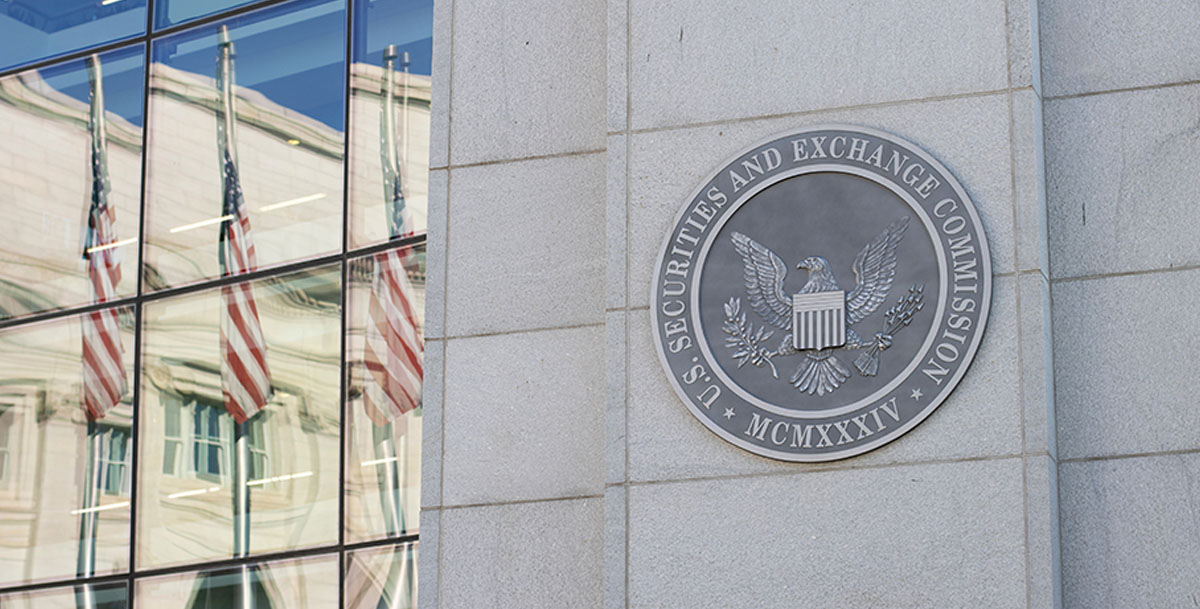
The U.S. Securities and Exchange Commission said it has obtained a temporary restraining order, an asset freeze, and other emergency relief against Indianapolis-based Backward Hat Capital and its co-founders, Phillip Williams and Devin Johnson, over what the agency described as an ongoing Ponzi scheme that raised approximately $560 million from more than 2,000 investors.
The SEC alleges that more than $470 million, or more than 83% of the money raised, was used for Ponzi-like payments to earlier investors (more than $250 million) or transferred to the firm’s founders and their entities (more than $220 million). The complaint, filed Nov. 17 in the U.S. District Court for the Southern District of Indiana and unsealed Nov. 20, also charges Johnson’s company, Indianapolis-based Traders Point Capital, and Joseph Anderson, who allegedly produced fake audit reports for the funds.
Williams, 51, of Kokomo, Indiana, and Johnson, 29, of Zionsville, Indiana, were arrested Nov. 18 on criminal charges brought by the U.S. Attorney’s Office for the Southern District of New York, which puts the amount raised at more than $600 million. Each faces one count of securities fraud, one count of conspiracy to commit wire fraud, and one count of conspiracy to commit securities fraud. The Commodity Futures Trading Commission (CFTC) filed parallel charges against Williams, Johnson, and 11 Backward Hat Capital entities in what the CFTC called a $550 million fraud scheme.
According to the SEC, from about July 2022, Backward Hat Capital, Williams, and Johnson sold limited partnership interests in 25 purported private funds, directly and through a network of promoters, including to some of Williams’s investment advisory clients. Investors were told their money would be converted to crypto assets and used for foreign exchange (FX) arbitrage through a proprietary “AI-driven” algorithm that purportedly produced monthly gross returns of at least 6%. An online portal showed investors monthly returns of 6.05% to 7.03% from at least March 2024 through at least February 2026, the SEC said.
The complaint alleges the funds conducted little to no FX trading. Of approximately $109 million sent to a Backward Hat Coinbase account from July 2022 to September 2025, more than $56 million went to the personal crypto accounts of Williams, Johnson, and a third co-founder, William Cody Harvey, according to the SEC. From October 2025 to Oct. 9, 2026, the scheme raised approximately $350 million and sent none of it to Coinbase for conversion, the SEC said.
The SEC alleges investor money paid for exotic cars, expensive homes, and private air travel, funded unrelated businesses owned by Williams and Johnson, and supported Johnson’s gambling. Promoters, some called general partners of individual funds, received more than $50 million, according to the complaint.
Starting in September 2026, the firm repeatedly delayed or failed to pay investor withdrawal requests, the SEC said. As of Oct. 9, 2026, Backward Hat Capital and its related bank accounts held approximately $500,000.
Anderson, 47, the former president and chief executive officer at Denver-based Institute for Process Excellence (IpX), allegedly drafted at least two “audit reports” and a “quality of earnings” report presented to investors as the work of an independent third-party firm. According to the SEC, IpX is a corporate training, certification, and change-management consulting firm that does not perform financial audits, Anderson is not an accountant, and he received approximately $2.5 million of investor funds.
Both audit reports stated that one fund, BH Capital Fund I LP, had $246 million in assets under management as of July 31, 2025, verified through bank statements, the SEC said. The fund’s bank account held $1.00 that day, according to the complaint.
Williams was an investment adviser representative at an unnamed registered investment adviser from April 2020 until January 2025, and at least five of his clients there invested in the funds, the SEC said. Backward Hat marketing materials described him as a managing partner holding a Series 7 license, although he had not held the license or been associated with a broker-dealer since 2020, according to the complaint.
Beginning in 2025, Johnson allegedly extended the scheme through new private funds under the AI Capital and Traders Point Capital names, aimed at institutional investors and investment advisers and their clients. Traders Point Capital applied to register with the SEC as an investment adviser on Sept. 11, 2026, and the application is pending. The SEC alleges its Form ADV brochure failed to disclose Johnson’s affiliation with Backward Hat Capital and AI Capital. Through Oct. 9, 2026, Traders Point Capital received $5.5 million from 28 investors, the SEC said.
The SEC charges Backward Hat Capital, Traders Point Capital, Williams, Johnson, and Anderson with violating the antifraud provisions of the Securities Act of 1933 and the Securities Exchange Act of 1934. Williams is also charged with violating the Investment Advisers Act of 1940, and Traders Point Capital with making false statements in its adviser registration application. The agency seeks permanent injunctions, disgorgement with prejudgment interest and civil penalties, and names Harvey and eight entities as relief defendants. The allegations have not been proven in court.
“The promise of a low-risk, high rate of return on a purportedly complex investment should make all potential investors stop and think before investing their money,” said Anne McKinley, acting associate director at the SEC’s Chicago Regional Office.
AltsWire has covered other alleged investment frauds, including SEC charges against the founder of PGI Global, a purported crypto and FX trading platform, and an asset freeze against Georgia lender First Liberty Building & Loan.
Visit the AltsWire directory page.