SEC Says Fake Advisers, Crypto Platforms Took $37M From U.S. Investors
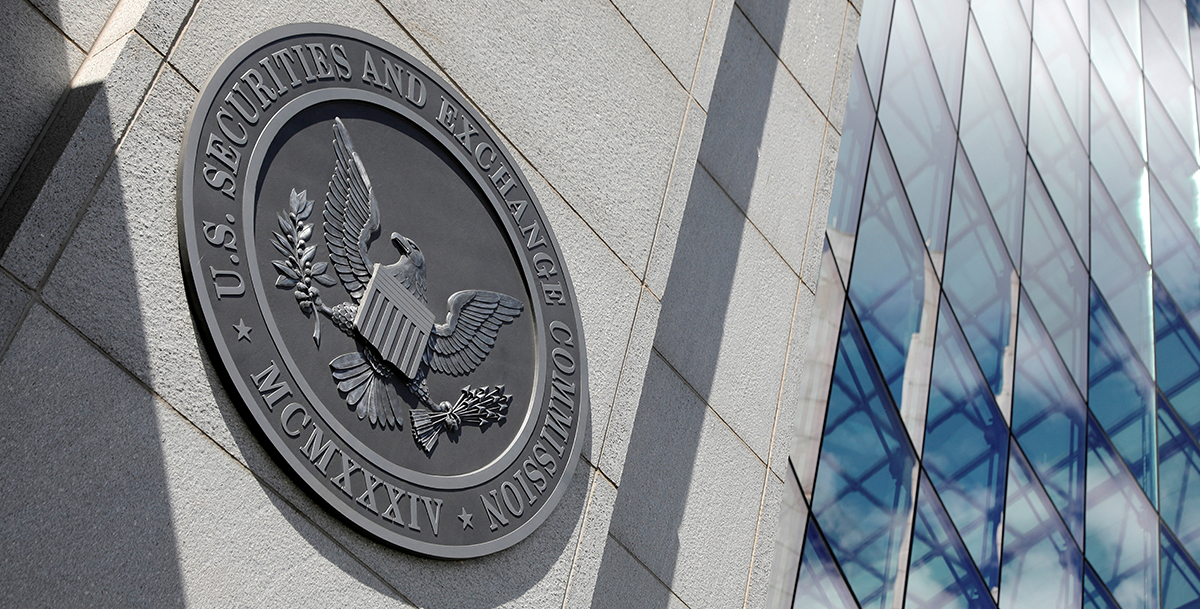
The U.S. Securities and Exchange Commission on Nov. 19 charged eight Colorado entities with allegedly posing as investment advisers and crypto asset trading platforms to take more than $37 million from U.S. investors.
According to the complaint, filed in the U.S. District Court for the District of Colorado, the entities defrauded more than 1,500 investors from August 2024 through May 2026. The SEC said the scheme was likely run by individuals overseas, citing Internet Protocol addresses that trace actions taken in the scheme to outside the United States.
Two of the entities filed Forms ADV with the SEC claiming status as exempt reporting advisers, and the defendants allegedly pointed skeptical investors to those filings, a Form D, registrations with the Financial Crimes Enforcement Network (FinCEN), and fabricated SEC certificates as evidence that regulators oversaw them. The SEC said it has removed the Form D and both Forms ADV from its website.
Four Adviser-Platform Pairs
The defendants worked in pairs, according to the complaint. Advisor WeChat Capital steered clients to Tech Brokerage Asset Alliance Ltd. (TBAA) from about August to December 2024; HB Wealth Advisors to IdeaCrypto Exchange LLC from about January to July 2025; Convergent Wealth Advisors Inc. to RealSimple Crypto Exchange Inc. from about July to December 2025; and Associated Wealth Advisors Ltd. to Essential Crypto Exchange from about January to May 2026. Each pair ran for roughly six months before its websites went down and its chats went silent, and a new pair took its place, the SEC alleges.
Social media ads directed prospective investors to WhatsApp chats, where purported advisers first recommended trades in U.S.-listed stocks. They then urged clients to sell stocks, 401(k) and other retirement holdings, and in some cases real property to buy crypto assets in so-called initial exchange offerings on the paired platform, according to the complaint. Each adviser also ran an identical contest in which investors voted daily for one of two purported advisers to manage a supposed $10 billion fund, the SEC said.
The platforms’ apps showed investments rising in value, but no trading took place and the crypto assets did not exist, the SEC alleges. Investors who tried to withdraw were told they first had to pay a fee calculated on their supposed profits. One investor lost nearly $500,000, including money borrowed from a 401(k) account; another lost about $850,000; and a third lost close to $1.6 million, including a house and an individual retirement account, according to the complaint.
Investors sent about $35.5 million in crypto assets and $1.9 million in fiat currency, a total of $37.4 million, to addresses the defendants controlled. The funds were consolidated on the Ethereum network and moved through cross-chain bridges to the Tron network, according to the complaint.
Filings Used as Proof of Legitimacy
TBAA obtained access to the SEC’s EDGAR filing system and filed a Form D in July 2024, and WeChat representatives cited its Central Index Key (CIK) number as proof that it was regulated, the complaint alleges. One representative told an investor that TBAA was “registered with the U.S. Securities and Exchange Commission (SEC) under the identifier CIK: 0002030953. This registration ensures that all of TBAA’s operations are closely monitored by the SEC.” The SEC said obtaining EDGAR access is ministerial and does not mean the agency monitors a company’s operations.
Convergent Wealth and Essential Crypto filed Forms ADV in May and September 2025, respectively, claiming they were exempt from registration because they advised only private funds, though their clients were individual retail investors, according to the SEC. Convergent Wealth listed no private fund, Essential Crypto listed an apparently nonexistent fund bearing its own name, and the regulatory contacts named on both forms do not appear to be real people, the complaint alleges.
In December 2025, an Associated Wealth representative told investors that Essential Crypto had received regulatory approval from the SEC and showed them how to find its Form ADV on the Investment Adviser Public Disclosure website, the SEC alleges. Forms ADV are not formally reviewed before publication; they are posted once accepted by the Financial Industry Regulatory Authority, which operates the filing system, and publication is not regulatory approval, the agency said. Each platform also registered with FinCEN as a money services business, a status the purported advisers cited as evidence of legitimacy.
Charges and Relief Sought
The complaint charges all eight entities with violating the antifraud provisions of the Securities Exchange Act of 1934. The four adviser entities are also charged under the antifraud provisions of the Investment Advisers Act of 1940, and Convergent Wealth and Essential Crypto are charged with making untrue statements in reports filed with the SEC. The agency seeks permanent and conduct-based injunctions, disgorgement with prejudgment interest, and civil penalties, along with an order barring Convergent Wealth and Essential Crypto from filing Form ADV as exempt reporting advisers.
Laura D’Allaird, chief of the SEC Enforcement Division’s Cyber and Emerging Technologies Unit, said the agency “continues to seek out and expose fraudulent investment scams that prey on U.S. investors” and encouraged the public to report such schemes through the SEC’s online portal. The agency also urged investors to check the background of anyone offering them an investment on Investor.gov.
The case follows a December 2025 action in the same court, in which the SEC charged three purported crypto asset trading platforms and four WhatsApp investment clubs with taking at least $14 million from retail investors. In September, the SEC sued Cryptoaiml Ltd. and TSAI Pro Ltd. in federal court in Manhattan, alleging in part that Cryptoaiml used a falsified Form D to claim SEC oversight. The agency brought what it described as its first relationship investment scam cases, against the purported NanoBit and CoinW6 platforms, in September 2024.
Visit the AltsWire directory page.